![[DOOR FLIES OPEN]](https://doorfliesopen.com/wp-content/uploads/2015/08/DFO-MC-Patch.png)


We made it to another weekend, hooray! This past week I got creative in the kitchen with Sharkette. She, for some reason, is obsessed with old episodes of The French Chef. Now in no way, shape, or form am I complaining about this. She’s always loved helping me in the kitchen and exposing her to a classic cooking show and chef personality is a win in my book. Speaking of books, I have The French Chef Cookbook by Julia Child. It’s a listing of the recipes from her show, and it’s an excellent book. One episode Sharkette re-watches constantly is one where Child makes a “Queen of Sheba” cake. We decided it would be fun to do a Julia Child night where we had the cake for dessert, and another of her dishes for the main. I’ve been wanting to do a coq au vin for a bit, so I decided that was the move, and Julia dinner was a rousing success.
What does this have to do with cocktails you ask? Well, a key ingredient to the coq au vin is cognac, which gets flamed in the pot. Now that I had a bottle, it was time to put it to good use since I rarely have some on hand. I decided to go with a classic cocktail: A Vieux Carre from the Vintage Spirits and Forgotten Cocktails book. It’s a split base with rye and cognac, and twin bitters in Peychauds and Angostura. I haven’t had one in a long time and I’m very much looking forward to making one.
Vieux Carre
1 oz. Rye whiskey
1 oz. Cognac
1 oz. Sweet vermouth
1/2 tsp. Benedictine
2 dashes Angostura bitters
2 dashes Peychauds bitters
Shake in an iced cocktail shaker and strain onto fresh ice in a rocks glass. Garnish with a lemon twist
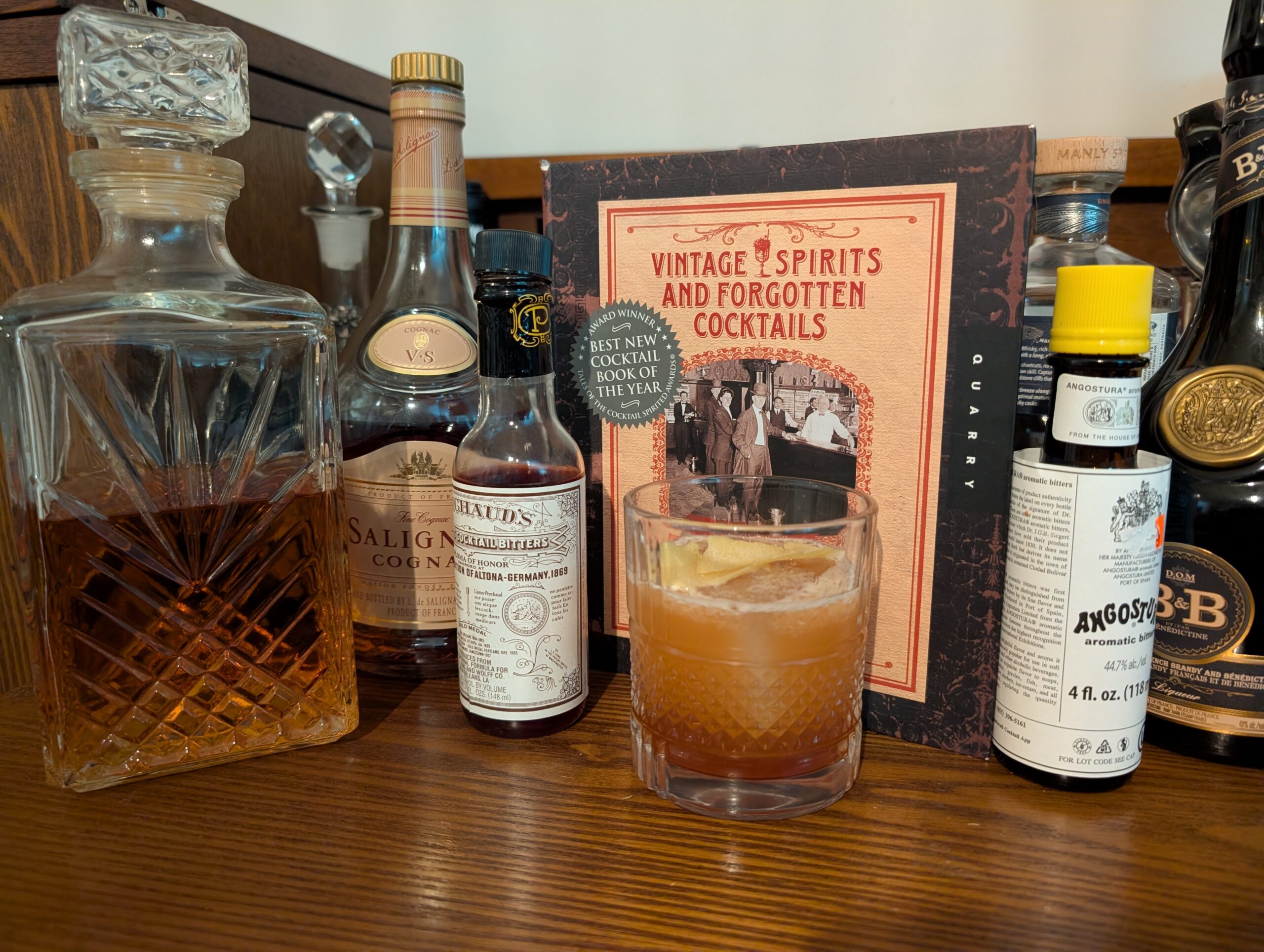
Very distinct combination of smells on this drink. I get a mix of the rye and the cognac, but oddly enough, I think its the Benedictine and the bitters that stand out the most. Not to the point where they are stepping on everything else, they are just a cut above the other ingredients at work here.
Oh this is excellent, as expected. It’s very boozy right off the bat, which makes sense given the split base of whiskey and cognac, topped with the Benedictine just to kick it up a bit. Despite it’s booziness, it’s very well balanced and doesn’t hit very hard all at once. Of the base spirits, the cognac shines through the most surprisingly. Maybe because I’m not used to having it on hand or using it very much at all, but I can really pick up the flavors here, and I don’t hate it at all. The rye does come through, albeit less so than the cognac. I only pick up on the rye flavors, not so much the boozy zip you’d think it would bring to the palate.
The vermouth I don’t pick up, but that’s got to be by design. It’s not really one for a starring role, more for depth and flavor balance. Fun fact, according to the recipe in the book, the author mentions people using dry vermouth instead of sweet and it working out well. Perhaps I should give that method a go at some point. I am running low on sweet vermouth after all…
Anyway, it finishes with the same amount of flavor going on. Nothing takes over and the flavors really stay the same all the way through the sip, and then some. I get some palate coating, I think from the cognac because again, that’s what I’m picking up on the most here, and I can certainly get it well after I’ve put the glass down.
I’m glad I finally got a chance to make this classic. It’s not often I have cognac on hand, and I plan on exploring it a lot more soon, and integrating more cognac based drinks and will probably start having to stock some in the cabinet for uses like this one.
(Banner image courtesy Matthew Tetrault Photography)




Leave a Reply
You must be logged in to post a comment.