![[DOOR FLIES OPEN]](https://doorfliesopen.com/wp-content/uploads/2015/08/DFO-MC-Patch.png)

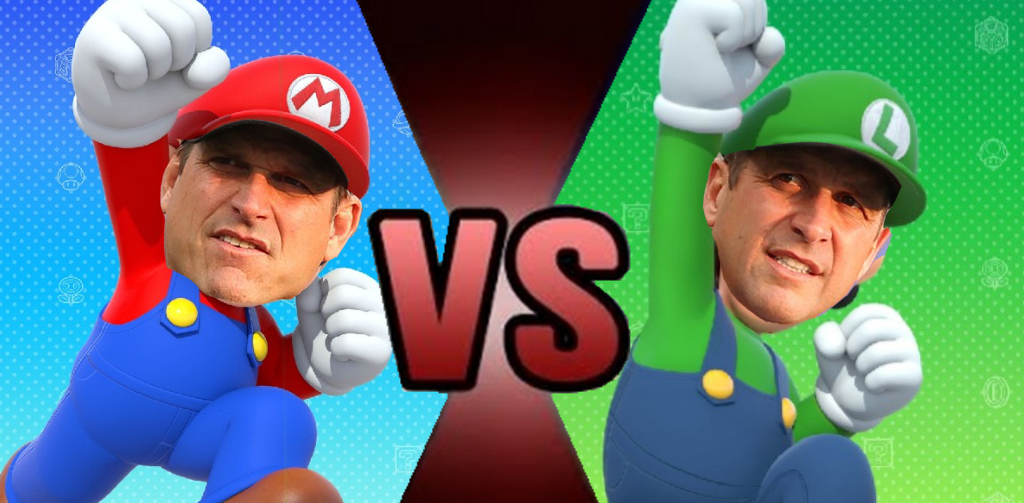


What am I, Jim? An idiot? Of course I do. I’ve watched each of them seven times this week, in fact.
I don’t know why you think seven complete times of watching a game is enough to teach you anything, John. I’ve only just started scratching the surface of the beauty of a tie, and I just hit triple digits in the number of viewings of each game.
I have a brilliant mind, Jim. That’s why you’re in college ball, and not me. At any rate, as a bone to the readers, let’s talk about an immaculate tie between an obscure rivalry this week.
THE FLAGSTAFF WAR
Combatant 1: The Māori people of New Zealand
Combatant 2: The Royal Navy, British Army & Board of Ordnance
Location of Conflict: Bay of Islands, North Island, New Zealand
Reason for Conflict: Someone kept chopping down a flagpole.

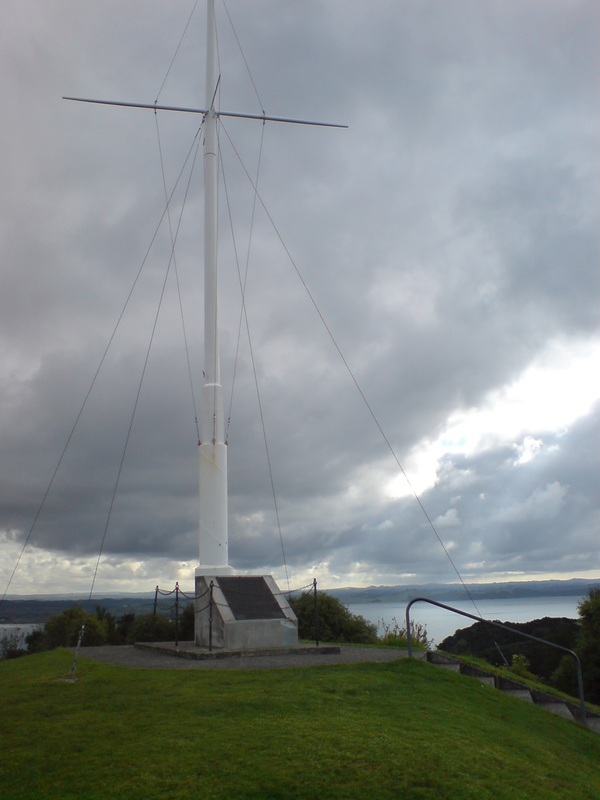
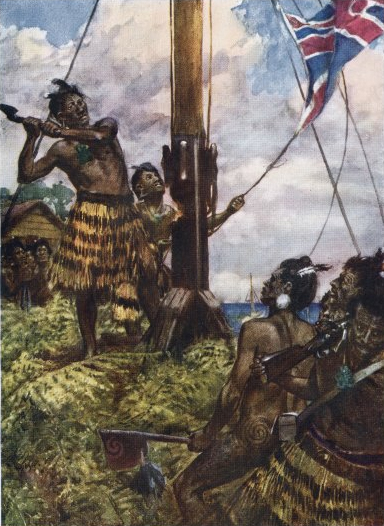
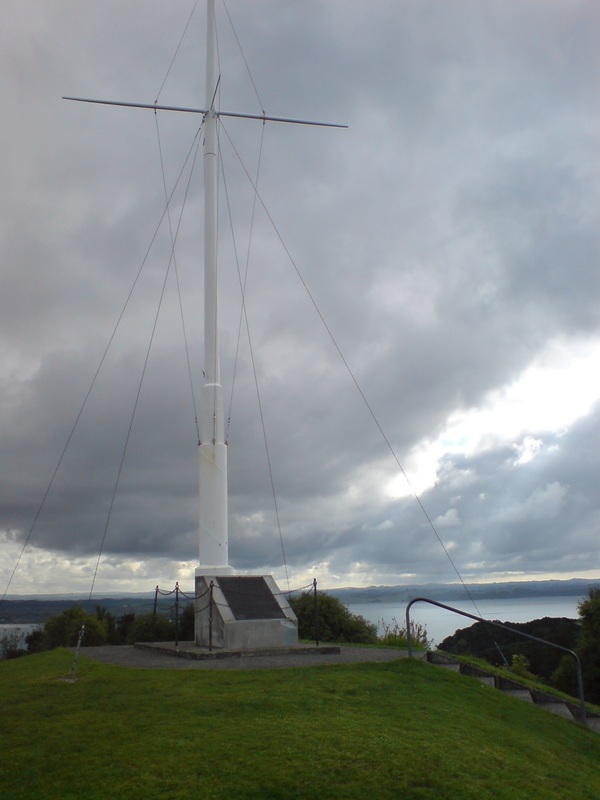
As early as 1841, however, many Māori chiefs felt that the treaty was unequal and soon to be devastating to their traditional way of life, and took up arms against the British in order to protect their peoples. The British colonial government persisted, imposing new tariffs on goods bought and sold, and encroaching on Māori lands, further exacerbating tensions. By 1844, Māori chief Hōne Heke of the Ngāpuhi was fed up, and decided to march on Kororareka to teach the Brits a lesson about unchecked colonialism. Heke’s ally, chief Te Haruata, chopped down the flagpole on Maiki Hill, where the British garrison was stationed, to show their feelings of betrayal.
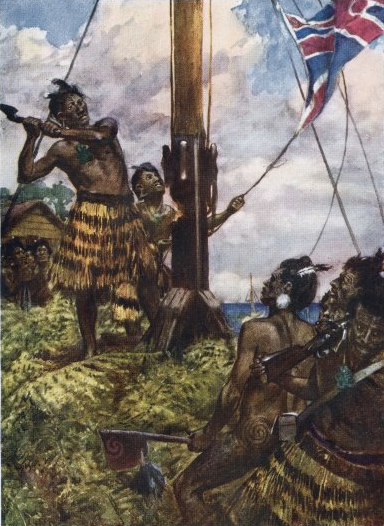
Hōne Heke actually had the flagpole re-built, but as relations with the British continued to deteriorate, he returned in early 1845 to chop down the flagpole down two more times. After the third destruction, the British built a blockhouse directly in front of it, and covered the pole in iron. Despite the show of force, Hōne Heke had no intention of backing down, and thus, the Flagstaff War officially commenced on the morning of March 11, 1845, with the raid of the town of Kororareka. Even with the Royal Navy moving HMS Hazard into the Bay of Islands to bombard the Ngāpuhi warriors ransacking the town, they still couldn’t keep the Māori from chopping down the flagpole a fourth time, and killing all the soldiers in the blockhouse.
The Flagstaff War was a messy war, particularly due to the fact that the Māori were not united in their contempt for the British colonial government; many tribes of Māori took up arms on behalf of the Crown, and waged war against Hōne Heke and the Ngāpuhi.
The Aftermath: In what was quite unusual for Māori custom, the Flagstaff War lasted for 10 months before a peace treaty was signed between the British and the rebelling Ngāpuhi tribes – an extremely long and protracted campaign. In the end, there was no clear winner and no clear loser – British hegemony was established on the North Island, while Ngāpuhi chiefs Hōne Heke and Te Haruata enjoyed tremendous boosts in respect and prestige amongst both fellow Māori chiefs and their tribes from across the North Island. In all, casualties were 82 British soldiers killed and 164 wounded, and about 60-94 Ngāpuhi warriors killed and another 80-148 wounded.
John… don’t call Jeff Fisher right now.
Why not, Jim? I had some questions about ties, and wanted to consult with the game’s greatest guru of playing not to lose.
Because I guarantee he’s got an erection the size of a baseball bat after reading about the stalemate we just discussed.
***
Information for this article taken from here, here, here, here, and here. Banner image by The Maestro.

















Leave a Reply
You must be logged in to post a comment.