![[DOOR FLIES OPEN]](https://doorfliesopen.com/wp-content/uploads/2015/08/DFO-MC-Patch.png)

32 years ago (just under the gun), the first known major robotic combat competition took place at the Herbst Pavilion at the Fort Mason Center in San Francisco, set up by Marc Thorpe. 16 robots competed in total:
-6 heavyweights (The Beetle, Doolittle, The Master, Ramfire 100, Tiny Tim, & TMZ)
-2 middleweights (South Bay Mauler & The X-1)
-8 lightweights (Andy Roid, Julie-Bot, Pain Mower, Satoru Special, Slow-Mo, Spiny Norman, TMZ [… again?], & Zomo)
The face-offs (the combat we know and love) were won by Ramfire 100, The X-1, and Julie-Bot), while there were also Escort competitions (trying to get past the House Robot) and a melee free-for-all.
There were three additional US Robot Wars championships in 1995-97, plus a 1995 UK Open. Then some legal bullshit occurred, which led to Robot Wars moving overseas and becoming the primary competition of the United Kingdom. A pair that would compete in a later Robot Wars competition, Greg Munson & Trey Roski, would eventually take the idea, tweak it, and run with it, which became BattleBots and really standardized robot combat rules and regulations with such things as its 3-minute fight time. It was at that point around the turn of the millennium that the sport took flight.
For 5 seasons on Comedy Central BattleBots aired with its four weight class competition. The original televised run of Robot Wars ran for 7 series on the BBC. Eventually, a combination of meddling and ratings canned both shows and though robot combat when dark from the televised scene, it just went underground, with RFL, RoboGames, and smaller weight classes gained a little more glamor—it wasn’t just to build a 220-lb. or 100 kg robot.
Eventually the shows returned, BattleBots and Robot Wars, the latter getting an additional three series, the former getting seven split between ABC and the Discovery Channel, currently putting on a new competition known as the Pro League—smaller than the televised seasons we’ve seen, but for the die-hards, about time. But that’s not all that we get in televised combat. China had their own robot combat shows, and the lower weight classes now have their turns in the limelight—Bugglebots, a 1.5 kg competition in Britain, ran on YouTube for a couple of seasons, and the largest competition these days outside of the televised ones we know is Norwalk Havoc Robot League, which will unfortunately be at Terminal 5 in the city on a Saturday when I have to fucking teach for 7 hours. (Someday I will have free time on a Sunday to head up to Norwalk.)
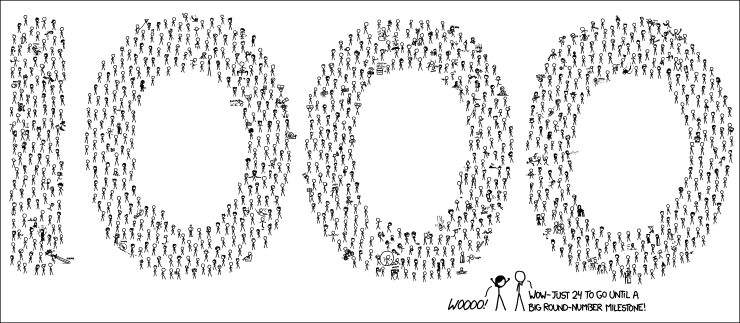
Anyway, the point of this article: it’s the 32nd Anniversary of Robot Wars. In the spirit of this xkcd comic making a binary powers joke, I’m doing the same thing. And with it, a fitting list. These are, in my terrible opinions, the 32 most influential combat robots of all time. Why? Because 32 is 100,000 in base 2 and I’m not waiting another 32 years for the 1,000,0002th Anniversary. (Dok will tell me if I’ve notated that incorrectly, I’ve never had to write ordinal numbers in non-decimal bases before.)
What is influential? Success doesn’t specifically equal influential. Some robots are inimitable and with it, their influence doesn’t quite match up to the phenomenal heights they achieved. Others may have been the cog that started future plans rolling, ultimately becoming the archetypal robot but before its time. Some may be the original, smaller-weight version of a robot that scaled up and you know today—in some of those cases, if it’s by the same team and more or less the same robot scaled up/down, more of the iterations of the robot are named.
I thought about this for a while, then forgot about it, then realized “oh shit, that’s next week, and I also forgot International Left-Handers Day” while I was doing some dice baseball league lore work. And admittedly, nobody is perfect and for me my blind spot might be the current NHRL meta, or robots from god-knows-where that competed for six months, but those six months were magic. But regardless, let’s do this, in descending order, as you do, starting at #32.
#32: CycloneBot
(Heavyweight, 2004-2006, CM Robotics)
Oddly enough, we start with a robot that wasn’t all that successful, as heavyweight CycloneBot lost more than it won. However, this is about influential, not about being iconic or the greatest, people do those lists all the time.
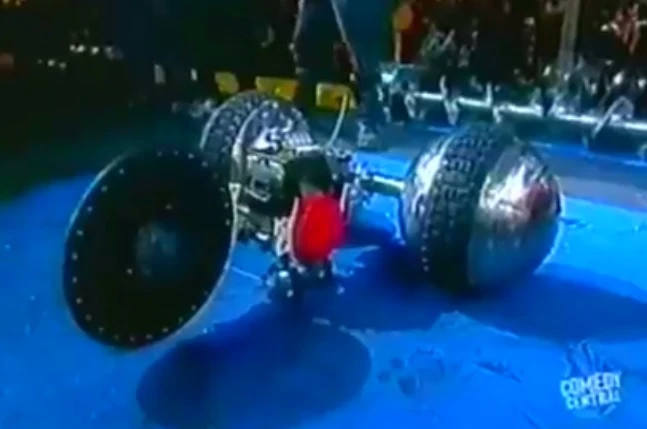
CycloneBot, built by Mark Demers (best known for Ziggy & Lucky), is on this list as the progenitor of meltybrain robots. Meltybrains are kind of the evolution of the thwackbots from the original BattleBots, which would not be allowed currently under active weapon rules. But basically the meltybrain design is a kind of translational drift where it basically acts like a full body spinner, but we mean full body—there’s no shell like your normal FBS bots. An LED charts direction as the robot, while rotating, still marches forward, hopefully. It’s been more effective in lower weight classes, but this was the first robot I could find with the technology, so it’s a spot.
#31: Gabriel
(Heavyweight, 2014-Present, Team Saint)
If Gabriel looks familiar, it’s because it among other things is the robot that led to HUGE. It competed in the British live heavyweight circuits of the mid-2010s pre-Robot Wars reboot, then competed in Series 8 and 10 of Robot Wars (and was a reserve in Series 9), and still competes as of last year. It was a simple hammer or knife, kind of more like an overhead thwackbot, as its offshoot version Zadkiel has a spinning bar on one side, similar to a horizontal spinner, but on the body (as opposed to HUGE, where the vertical bar is in the middle). It’s best known for a close judges’ decision loss against Carbide, showing the flex and the durability of the HDPE wheels that we would again later see in modern BattleBots with HUGE.
#30: RON/megatRON/SawBlaze
(Beetleweight/Featherweight/Heavyweight, 2016?-Present, The Variable Constant/Team SawBlaze)
In some cases I’ve grouped different iterations of the same robot together. I couldn’t find anything on RON, but the other two are as well-known as any. megatRON and SawBlaze are Jamison Go’s hammersaw robots, the former at 30 lbs.. The evolution of the overhead saw archetype that SawBlaze and Skorpios both debuted in Season 2 of modern BattleBots and first showed up with a bot later on this list, the hammersaw is essentially an articulated vertical flywheel (or bar, or in SawBlaze’s case dragon shaped) that debuted in Season 4, making SawBlaze (and Skorpios, who also had their own version), far more damaging, leading to being the reigning champion (though SawBlaze is not competing in the ongoing Pro League). But these upgrades came as a result of work on megatRON, the lower-scaled robot acting as a test platform for SawBlaze. It’s worked over the years, as at one point megatRON was the #1 ranked featherweight in NHRL, a champion in its own right.
#29: Razer
(Heavyweight, 1998-2016, Team Razer)
Oh boy, hot take time. “Senor, Razer is unarguably one of the top five televised heavyweight robots of all time, and one of the top three Robot Wars robots of all time. Arguably, it’s the best Robot Wars competitor ever. Why is it 29th on your list?”
And the answer is because it’s basically one of a kind. Hydraulic crushers are a rare breed—all the other crushers in Robot Wars never made it past the heats, and the only crusher to see real success is Spectre/Quantum, which won the first season of King of Bots.
And in fairness, one of those other arguments for best Robot Wars competitor ever, Carbide, isn’t even on the list. But, Razer was the best of both worlds, the sleek art bot that was deadly, the legitimate competitor that was a work of art. The Best Design awards, plus basically winning every competition at some point or other, meant that when you think of a robot in the turn of the millennium, you think of Razer. My generation getting into robotics? They thought of Razer, and that’s influence.
I’m inevitably going to get the shit flamed out of me if I post this anywhere else.
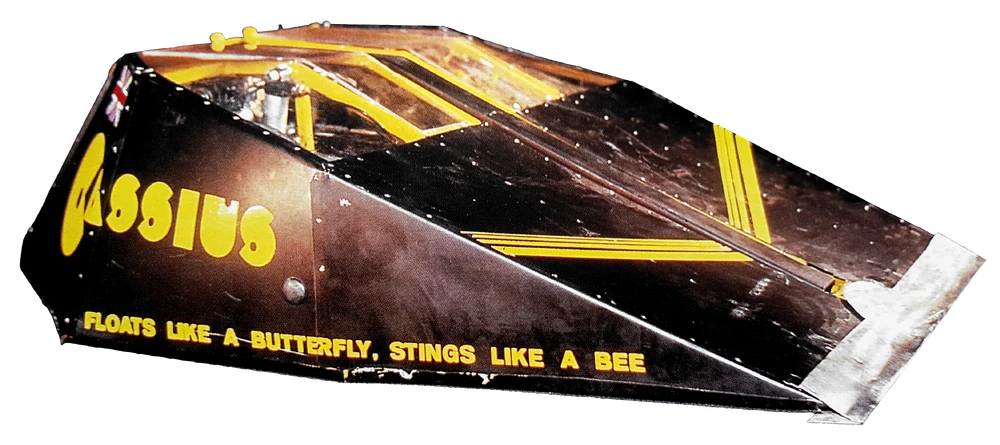
#28: Recyclopse/Cassius
(Heavyweight, 1997-1999, Team Cassius)
We’re putting Recyclopse above Razer? Recyclopse only competed in Series 1 of Robot Wars before giving way to the much more famous Cassius! Cassius at least makes sense, being a Series 2 runner-up and the first televised robot to self-right (more on that later). But Recyclopse joins the pairing on its principles, principles that we’ve seen today with JackPot and more notably Rusty. Made from scraps and recycled material (hence the name), the whole bot according to Rex Garrod cost under £100.
Rex Garrod, though not a robot, but the guy behind the robots, also deserves mention, as he quit Robot Wars after Series 3 due to safety concerns. His protests are big reasons why safety in most robot combat competitions is so paramount, not just in the arena but in the pits. Thank you, Rex. I hope you’re resting easier with the strides the robot combat world has taken over the last 25 years.
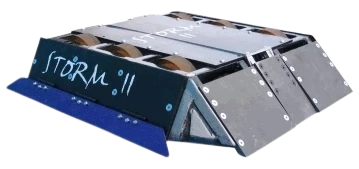
#27: Storm 2
(Heavyweight, 2002-2018+, Team Storm)
One of the most controversy-centered robots of all time (the Series 7 championship vs. Typhoon 2, the World Championship match vs. Supernova, stories in the pits of Series 8…), but Storm 2 was a faster, stronger version of push/ram bots, the evolution of the meta being set up by Series 6 champion Tornado and across the pond with Panzer and especially in the super heavyweight division, though those were more of the traction and torque 6/8 wheel varieties. Regardless, thanks to its New Blood Championship, coupled with Tornado’s triumph, speaking of controversy, led to Robot Wars making an active weapon rule for Series 7—you couldn’t have any sort of just-a-rammer robot, and even defensive mechanisms had to have an offensive purpose behind them. (Admittedly that part as written feels a little silly.)
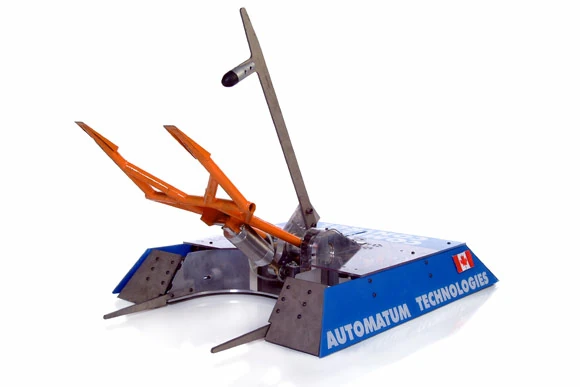
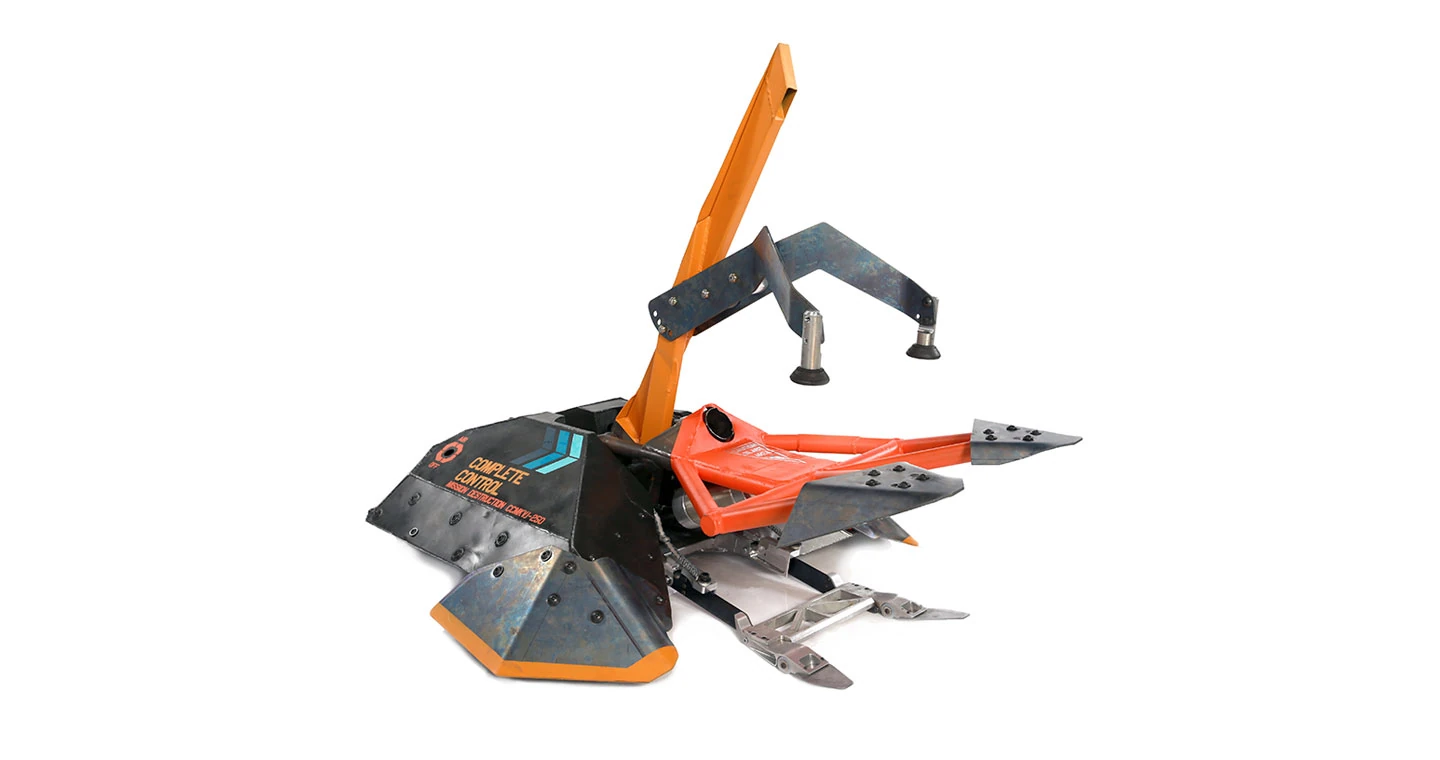
#26: Complete Control
(Middleweight 2000-2002/Heavyweight 2015-2016, Team Mission Destruction)
A rare two-weight-for-one, Complete Control fits on this list for two distinct reasons. The first is as the first clampbot of renown, able to bring its clamping arm down and, with its bottom lifting arm, suplex robots, first seen against Super Chiabot (though it overbalanced and also tipped itself over). This led Complete Control to the heights of the Season 4.0 championship… where Derek Young was unable to win the Giant Nut with a second middleweight (he won way back in 1999 with Son of Smashy) because it lost to Hazard in one of the iconic beatdowns of the sport.
Years later, in the reboot, Complete Control returned, partially tongue in cheek because the rules did not specifically rule out nets as entanglement devices against Ghost Raptor. With that loophole immediately closed, a rematch was called, where Complete Control lost that fight. But that’s not the second part!
In Season 2, Complete Control, now armed with a flamethrower in addition to its clamp, fought Bombshell, and spent a great deal of time with Bombshell roasting in its jaws en route to a unanimous decision win. Somehow Bombshell spun it into a wild card and a Cinderella run losing at the hands of Tombstone, but back to Complete Control, it then lost in an instant classic to Warhead in… another one of the iconic beatdowns of the sport, going out in a blaze of glory, or a Viking funeral. Derek Young, now a father, retired from the sport and has been a judge for BattleBots since.
#25: The Master
(Heavyweight, 1994-2002, Team Sinister)
An iconic robot from the pre-televised days, though with legacy secured, it did compete in classic BattleBots—an 8-year old robot from the beginning of it all competing making the round of 16. The Master, the Robot Wars 1995 co-champion (more on that later) was known, among other things, for its interchangeable weaponry, the first robot to have that Swiss army ability. The Master had a circular saw (its “signature” weapon), a lifting arm, a “sword” weapon to act as a thwackbot, and a kind of flail as its weaponry. And, in classic Mark Setrakian fashion, a Best Design winner and the first showing of him being the godfather of combat robotics.
#24: South Bay Mauler/Mauler (various incarnations)
(Heavyweights, 1994-2002, South Bay RoboWarriors)
One of the more unique personalities of the classic era, Mauler is known for many things: accidentally flipping itself over, flipping itself back over. Okay, those are different versions of the same thing, the bad and the good of “pulling a Mauler.” But regardless, the gyro dances and the being so powerful that it broke its own weaponry and bent its own painted shell are the first of its kind. It’s the first overhead spinner, eventually becoming the full-body shell spinner that we know it best as.
#23: Hazard
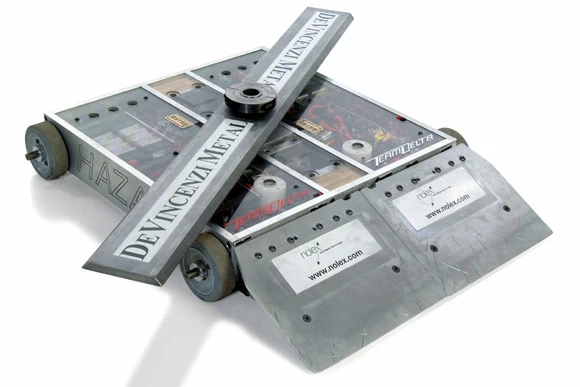
(Middleweight, 2000-2002, Team Delta/Team Hazard)
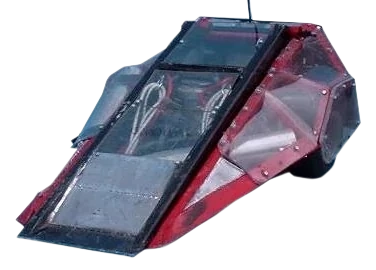
If you had a Mt. Rushmore of the classic televised era of robot combat, three of those robots would be heavyweights, Razer being one of them, the other two being later on this list. The fourth would be a middleweight overhead spinner, by far the best of the overhead spinners we’ve ever seen, named Hazard.
Hazard, originally designed by Tony Buchignani and designed by Dan Danknick, was the gold standard in BattleBots. Three Giant Nuts in Seasons 1, 3, and 4. It didn’t compete in Season 2. All that added up to a 17-fight win streak that was only snapped by T-Minus getting its extended length flipper under Hazard’s front wedge, stopping the blade.
No overhead spinner has made quite the same splash as Hazard, but the closest is likely Paul Ventimiglia’s Brutality (which later became Perfect Phoenix). Icewave and Bloodsport have carried the mantle as well, the former being a solid robot in its own right in the middleweights before scaling up, culminating in that BattleBots Season 1 quarterfinal, the latter adding the srimech pole that was first added to full-body spinners by honorable mention Ziggo. (They used it more as a flag/directional marker but it may have helped had Ziggo ever been flipped.)
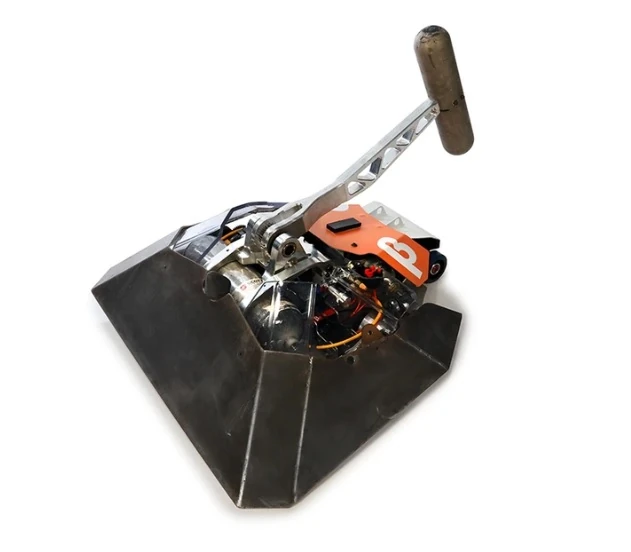
#22: Killerhurtz/Terrorhurtz/Beta
(Heavyweights, 1999-2023, Team Hurtz)
The undisputed king of the hammers, with apologies to Jascha Little of The Judge & Chomp and to Bots FC and Shatter!, especially as the pneumatic variety. But even if most of the major hammer bots to this day remain electric powered, and it’s still a niche group. Team Hurtz had success in both BattleBots and Robot Wars, though never winning a championship until the post-Robot Wars circuit in 2004 and 2009. And who can forget John Reid saying to wait for a good hit? Or driving directly into the pit?
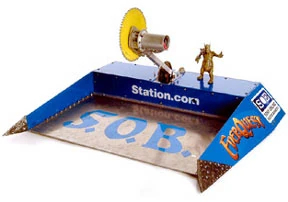
#21: S.O.B.
(Middleweight, 2002, Team SOE)
A robot that competed in two seasons (Season 4.0 & 5.0) ends up 21st? Above Team Hurtz and Razer? What the shit?
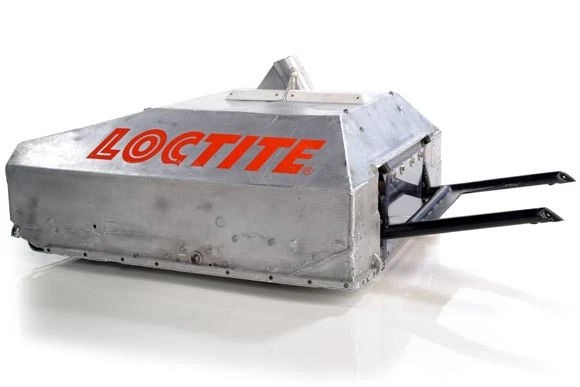
Well first off, I didn’t even know it competed in Season 4.0 since it lost its first fight because someone forgot to plug the saw battery in, so thanks BattleBots Wiki. But second off, if that design looks familiar, it should. This is the bot that started the overhead saws and the dustpan bots. The dustpans still get used to an extent in lower weight classes (especially I’ve seen in flamethrower bots), and of course the overhead saw needs no introduction, as we’ve talked about it with SawBlaze. S.O.B., made by Team Sony Online Entertainment employees, proceeded to then… make it all the way to the final in its first actual attempt where they didn’t proceed to make a rookie mistake, losing only to T-Minus, which did not have what would have been the greatest let-down in robot combat history after defeating the previously undefeated Hazard. But again, S.O.B.’s legacy comes in the bots after it, the dustpans, the overhead and now-evolved hammersaws, the Skorpioses and SawBlazes of the world.
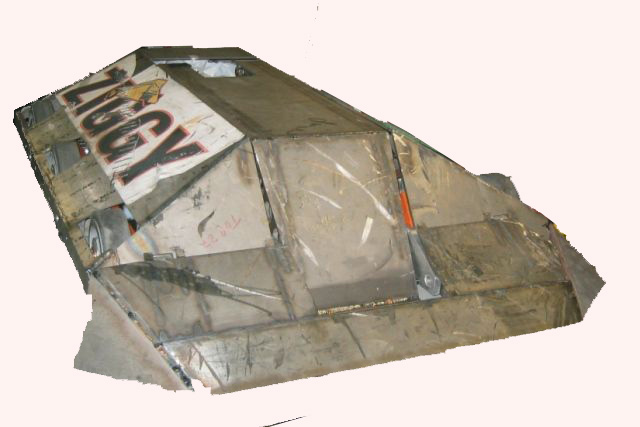
#20: Ziggy
(Super Heavyweight, 2005-2010, CM Robotics)
The second CM Robotics robot, this is certainly not anywhere near the same as CycloneBot. No, Ziggy was a six-wheeled flipper that won five straight super heavyweight Robogames competitions from 2006-2010.
And then they stopped running super heavyweights. The division died out. And if you close up a division to the point it’s extinct, lemme tell you, that’s influence.
Then they used the frame to make Lucky in modern BattleBots.
#19: Hypno-Disc
(Heavyweight, 1999-2002, Team Hypno-Disc)
Yes, we’re putting Hypno-Disc ahead of Razer. The reason is because of the style of the weapon and how it was used after. As mentioned, hydraulic crushers remain few and far between. Front-facing horizontal spinners? You’ll see one later in this list. And the first notable one was Hypno-Disc. In a Robot Wars world that had nothing like it, it caused destruction. In some cases (like against Splinter) more like annihilation. It didn’t win the championship but was the best robot to not win one, making the Grand Final (top 4 or better) on three separate occasions.
#18: Professor Chaos
(Middleweight, 2008-2010, students from WPI)
Yeah, we don’t have an official team as this is of course during the dark ages. But Professor Chaos was a middleweight robot that competed in three years of Robogames competitions. It won in 2008 and 09 and finished 3rd in 2010. More importantly for this article though, it was the first robot of note to have what’s now commonplace, a single-toothed disk to attack, rather than a fully symmetrical two or more. As a result, more bite and more damage. Think of your wedged vertical spinners now, and they’re almost all asymmetrical disks or bars.
#17: The RioBotz stable (Mini-Touro, Touro, Touro Maximus, Minotaur, etc.)
(Various weight classes, 2003-Present)
They’re all admittedly pretty much the same robot, so they can be lumped in together. But regardless, Team Riobotz, from Rio de Janeiro, is, and has been, the first and foremost non-North American, non-European, robotic combat team. Sure, you can argue this is more about the team than the individual robots, in terms of Marco Meggiolaro quite literally writing the book on combat robotics and strategies, but the sport has become so much more global over the last 20 years. Sure, you can start with Supernova, the robot from Series 7 of Robot Wars that represented Sri Lanka in the World Championship and nearly won it before being deemed previously immobilized by the judges, giving the victory to Storm 2, but they were from Wellington, Surrey.
So the drum bots of Team RioBotz get that honor, winning titles in nearly every weight class imaginable, inspring other teams from around the world to build their own bots, and make the sport more global. After all, you don’t get to write the book on robot combat unless you really know what you’re doing.
#16: Gravity
(Heavyweight, 2003-2015, Team Mad Science)
Some time in the British live circuits for cost reasons and for safety reasons, big kinetic energy spinners were restricted and/or more or less banned. Carbide coming into the fray to compete at full bore was a rare thing that we saw in Robot Wars, because it’s Robot Wars.
As a result, the style of robot commonly known as the Brit flipper reigned supreme. Now, the Brit flipper is not referring to any flipper made specifically, but a wedged flipper. You can make the argument that Cassius 2 should be here on its own as the first one, but as a front-hinged flipper (more of a British thing than an American thing), I’m going technicality here and talking about your standard rear-hinged flipper. Facet may have been the first in Series 3 of Robot Wars, but it also was unlucky, got a bad heat, and ended up losing to another wedge flipper, but this one another front hinge, in Firestorm. So we’ll need one with a bit more success in Robot Wars. Like, funnily enough, a Dutch robot.
Yes, Gravity was Dutch competing in the UK Robot Wars after slight success in the Dutch Robot Wars. This version of Gravity, Gravity 3, was a wedge with a flipper, and its modus operandi was to try and score out of the arenas, instant wins. And it succeeded, among other things setting the record for fastest battle in Robot Wars history in under 6 seconds, a time that since then has somehow been beaten.
And it went for the House Robots, flipping Growler and more surprisingly being the only robot to flip Dead Metal—its wide base made it resistant to being overturned. They also managed to drop a robot on the inner wall, breaking it and calling for a cease. Which they didn’t hear at first and flipped Hydra over a second wall, getting a warning to not do that again. It made it to the second round of the series semifinals before losing to defending champion Tornado, a more than respectable Top 8 finish.
#15: Lynx
(Beetleweight, 2019-2023, Iba Labs)
Yes, we’ve got a beetleweight in here, 3-pounders represent!
Lynx was a beetleweight built by Calvin Iba, best known as the driver for MadCatter. But one of those reasons is from a legendary beetleweight.
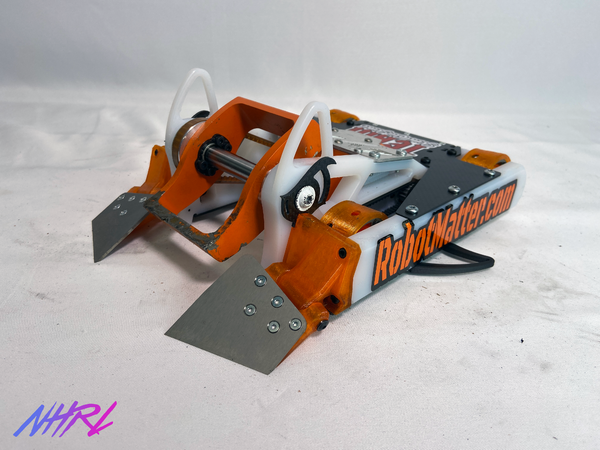
Lynx is one of the bots that best codified the modern meta. It is, as the image shows, a 4-wheel drive eggbeater spinner (similar to a drum but missing the middle, like an eggbeater mixer) with wedgelets on the side to get under the opponent, and to great effect, going 44-7 in NHRL competitions between 2020 and 2023, especially going on a tear between November 2021 through 2022, where it lost once in a final, and then (since it’s double elimination) immediately coming back to beat the same robot in the winner-take-all rematch. With wooden floors, the NHRL box can be a difficult place to get traction, so Lynx had titanium stubs on its tires. The last event I see archived is Lynx winning Robogames 2023 for a career record of 87-10, a defining record of the era for a bot that has defined the era. Calvin Iba has competed with iterations/variations of Lynx, including with rival Droopy (see that lost in a final above) for a robot they called Booty Brigade, using NHRL’s weight allowances to loophole essentially having the two of them fight together, which won a 2023 championship, essentially being two of the best robots in one. Because they could (going 13-2 in their two events).
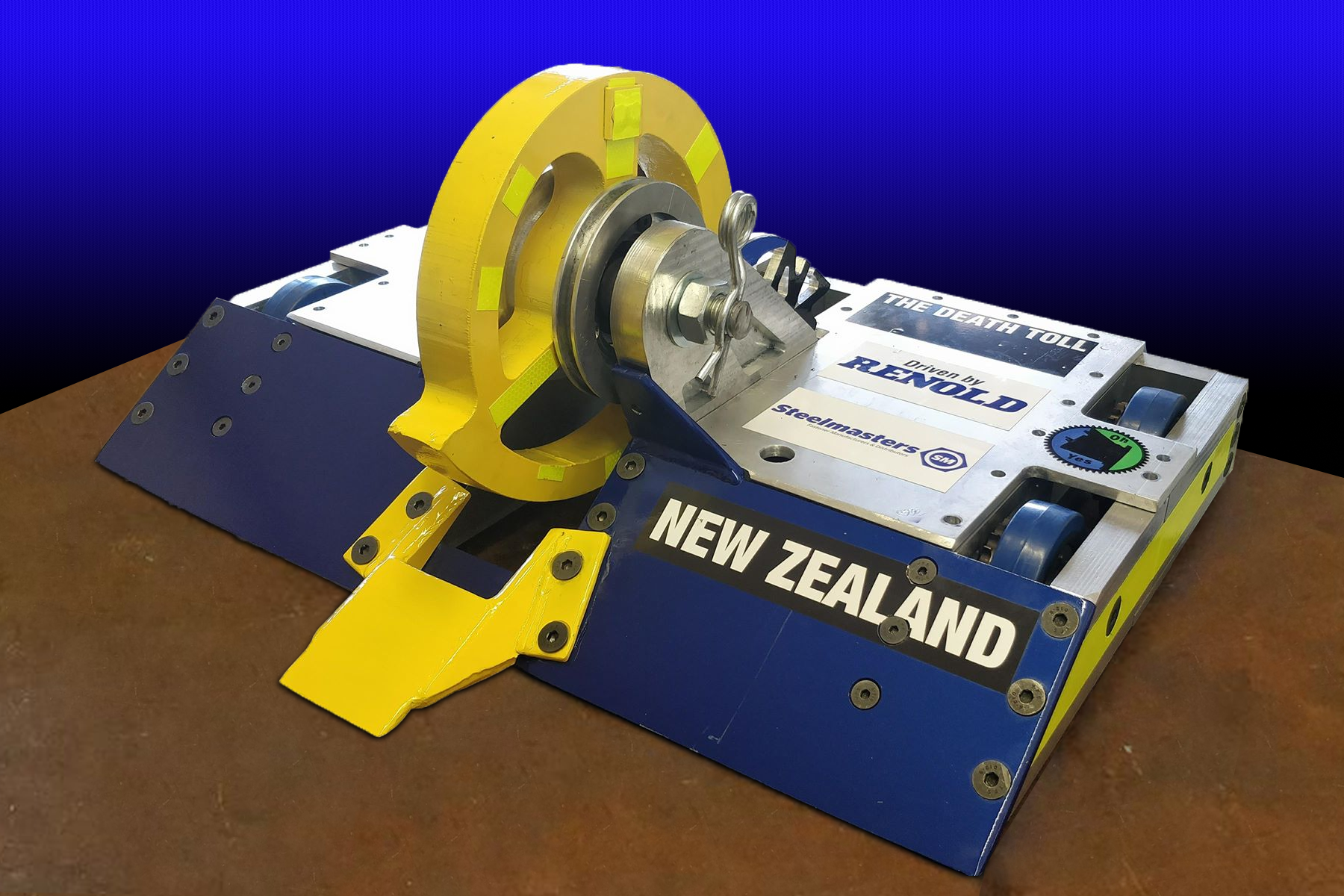
#14: Death Toll/End Game
(Heavyweights, 2018-Present, Team End Game/OYES Robotics)
Mostly End Game, but Death Toll fought in the 2018 Fighting My Bots competition in China and won that, so it counts.
Having said that, as you’ve read this blog you are likely aware of End Game’s accomplishments: Season 5 winner of BattleBots and winner of both BattleBots: Champions competitions, making it a Giant Nut winner and the only Golden Bolt winner, winning it twice so far. But why is it in the top 15 when other legendary robots are lower?
That is because of its evolution of the all-important ground game. “Low man wins” rings just as true in robot combat as it does in other combat or contact sports. So, not to be content with just their normal wedge, the New Zealand squad experimented with different types of wedgelets, forks, the works. Like, to the point that it was getting a bit ridiculous as they had customized setups for each opponent and it times it seemed like their main opponent was the killsaws. Like the time they got caught in the killsaws which led to a loss against RIPperoni.
I haven’t watched Pro League yet so I don’t know how ahead of the curve they remain. I’d say no one’s probably gone as crazy with their forks as the Kiwis though, that seems like a safe bet. And in that case, it’s hard to imagine too many bots getting under them.
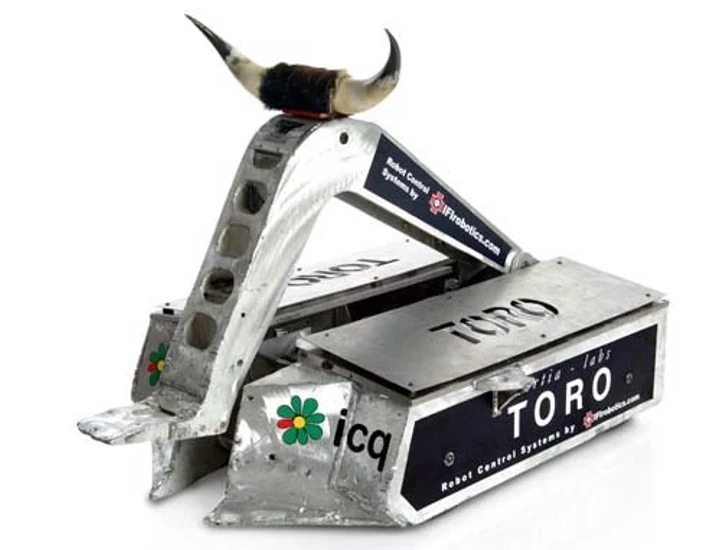
#13: Toro
(Super Heavyweight, 2000-2002, Inertia Labs)
Chaos 2 may have been slightly earlier in the pneumatic flipper game, but nobody for some time did it like Inertia Labs, with Toro being their first and arguably most successful robot.
After pneumatic spike Rhino appeared in Season 1.0 of BattleBots, the story goes that one of the pair thought, “What if we made the pneumatic ram vertical?” That gave the idea of making a flipper, and they ran from it from there, able to flip their competition up to 5 feet in the air, winning two rumbles and the Season 4.0 Giant Nut in the process.
And then you remember that competition were super heavyweights, 340 lb. behemoths. Chaos 2 never had that level of raw flipping power and we wouldn’t really see it in Britain until Wheely Big Cheese and its legendary flip of Axe-Awe.
They would turn up the power with T-Minus, The Matador, and eventually Bronco, but the flipper power race turning it into a damaging weapon, not just a controlling weapon, started with Toro.
#12: OverKill
(Heavyweight, 2000-2003, Team Coolrobots)
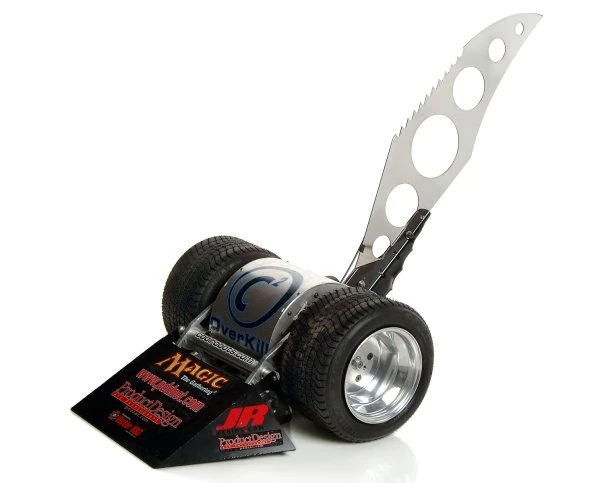
Super heavyweight Minion won the hardware, taking home two Giant Nuts over its career, but heavyweight OverKill was Christian Carlberg’s iconic robot. Armed with a knife that would make Crocodile Dundee proud, OverKill was never knocked out in its competitive BattleBots career, later earning a spot as a show bot in Destruct-A-Thon shows. Its two foam-filled wheels offered an enticing target but being as big as they were couldn’t really be destroyed. In terms of its losses, again, in the rock-paper-scissors, they were to lifters and flippers, the paper of the meta, out-controlling OverKill.
That knife brought another addition to the rock-paper-scissors of BattleBots, on the side of the rock: the spinner-killer. The knife was made of a high-tensile steel (according to the Wiki). As a result, spinners that hit the knife would often disable their own weapons without doing too much damage to OverKill itself.
Bots these days can claim to be spinner-killers, with the most notable one currently probably being Skorpios (at least against horizontals)—Rotator, being a spinner, can’t really count. It’s part of why Christian Carlberg gifted Skorpios one of the knives.
And then they used it against SawBlaze, and it upset the balance of the robot and didn’t work. And then Zachary Lytle gifted it to Jamison Go of SawBlaze, continuing the cycle.
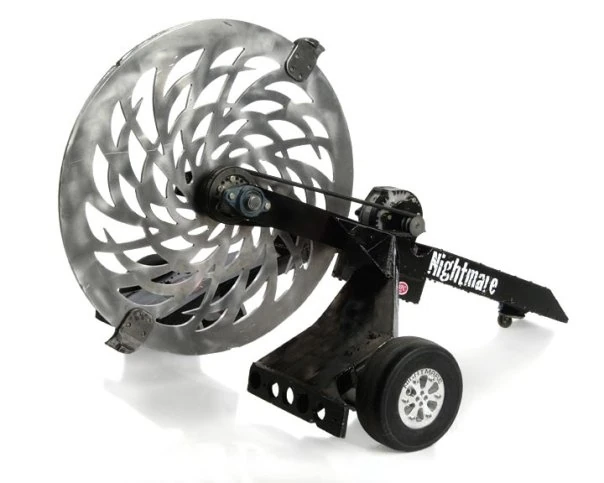
#11: Nightmare
(Heavyweight, 1999-2018, Team Nightmare/Team Hercules)
Pick a robot from the Comedy Central seasons of BattleBots!
There is a reasonable chance that you picked Nightmare. If we narrowed it down to heavyweights, probably one of the top 2 picks. It’s that iconic with its giant spinning disk. It also helps that it was in two of the iconic one-hit KO fights of the classic era, both on the giving end (vs. Slam Job) and on the receiving end (vs. Son of Whyachi).
Before that though, its spinning disk gave an entirely different headache. Also after that, we’ll get to one at a time.
In the before, its giant spinning disk did plenty of damage, as you’d imagine, sending pieces of robot sky high. Early robot arenas didn’t have ceilings, so thanks to Nightmare the arena was made completely enclosed. In the meantime, Nightmare had to spin downwards, you know, backwards. Because pieces of robot potentially going into the audience is really bad.
In the after, we fast-forward to Series 5.0. Nightmare lost a tooth in a fight against Warhead, the giant dome head shearing it off. Nightmare then competed in the rumble at the end of the season, tooth reattached to the disk. It didn’t stay attached, breaking off of the disk and going into the roof. And it breached the roof. The rumbles were subsequently canceled. And rumbles basically stayed canceled for another, like, 20 years. 3 bots, sure, but more? That’s why the Last Chance Rumble in Season 3 was such a big deal. I mean that and the DUCK! vs. Bombshell controversy.
Anyway, for its forced contributions to robot combat, Nightmare ranks 11th. And that puts us into the top 10!
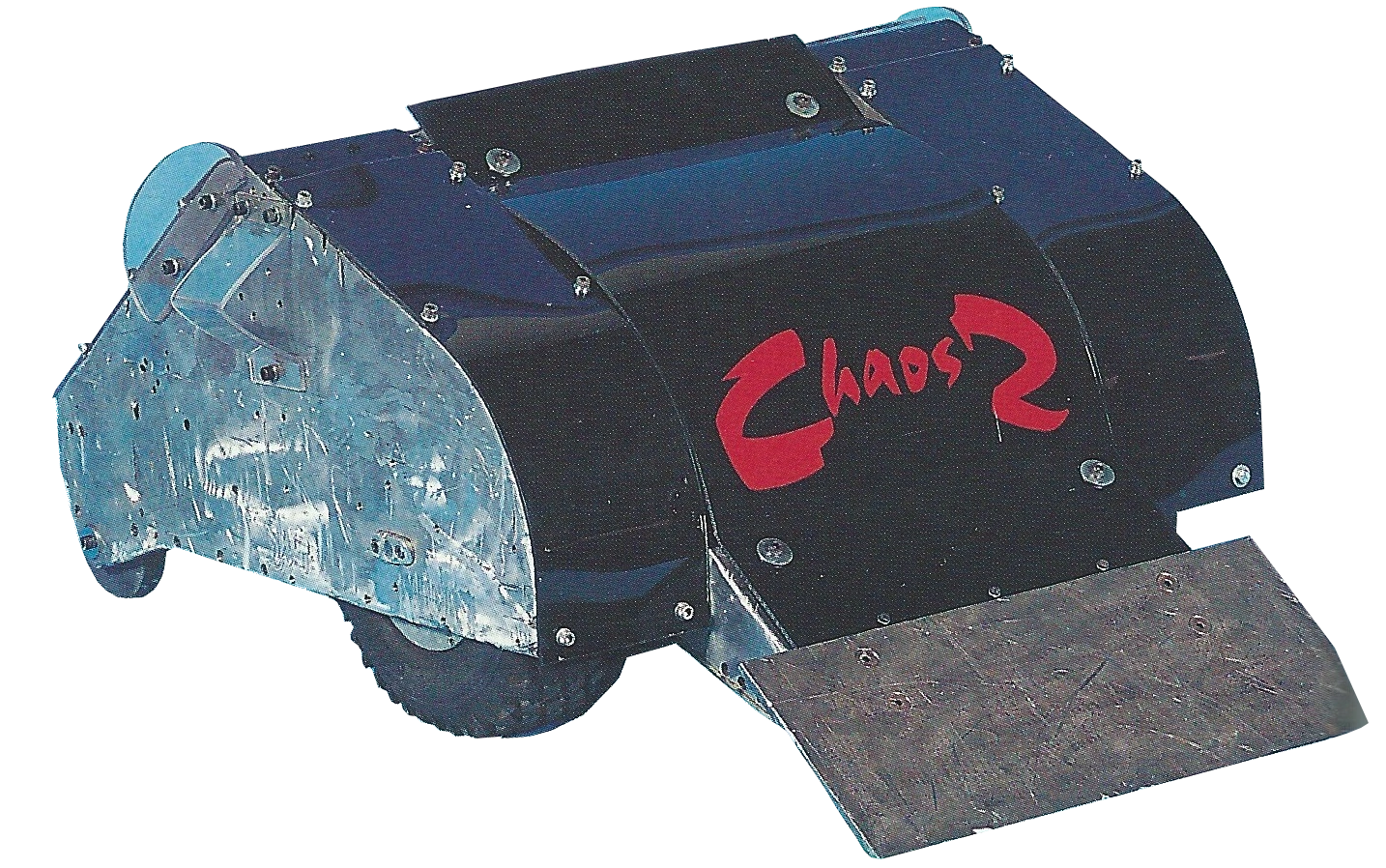
#10: Chaos 2
(Heavyweight, 1999-2007, Team Chaos)
If you made an argument that this, not Razer, was the greatest classic era Robot Wars robot, you’d have a chance. Razer won a little bit of everything (two World Championships, two All-Stars Championships, an International League title, a European Championship, a UK title, pinball… yes, pinball), but only Chaos 2 was able to successfully defend its title, a two-time UK champion. It was a pneumatic flipper before even Inertia Labs took to Toro, beating the bull by a year. Considered one of the more poweful flippers in Robot Wars history, it was the first robot to throw another out of the arena, entirely by accident against Firestorm. And that started a flipper revolution as hey, that’s an instant win! Arenas have changed and evolved over the years as a result of this accident, and especially as flippers got more powerful and did it more often. You had to bring the walls up, or make specific corners, or have arenas that didn’t have those kinds of corners.
Chaos 2 apparently competed in some live events after its Robot Wars days, finally officially retiring in 2007, Hall of Fame status well assured.
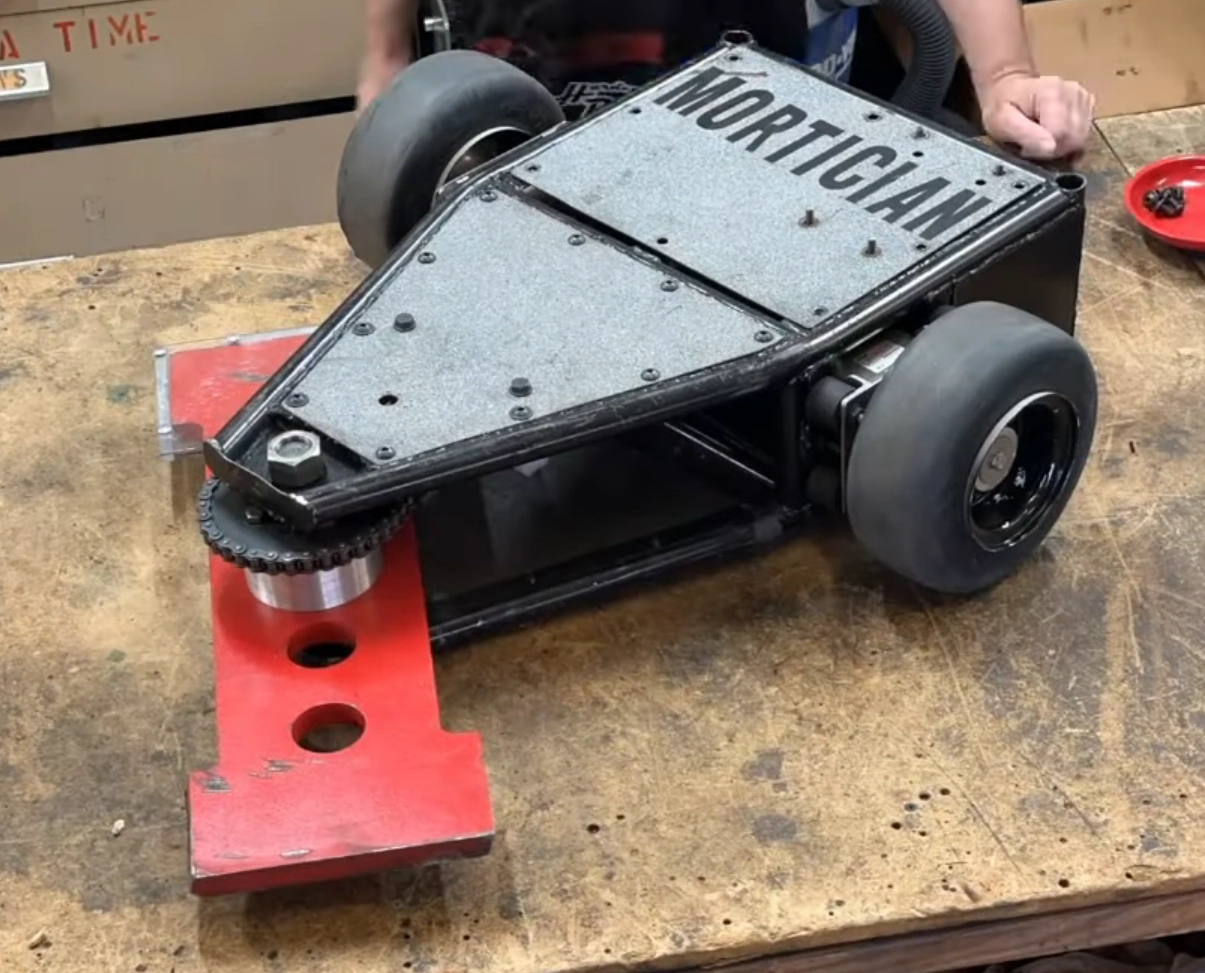
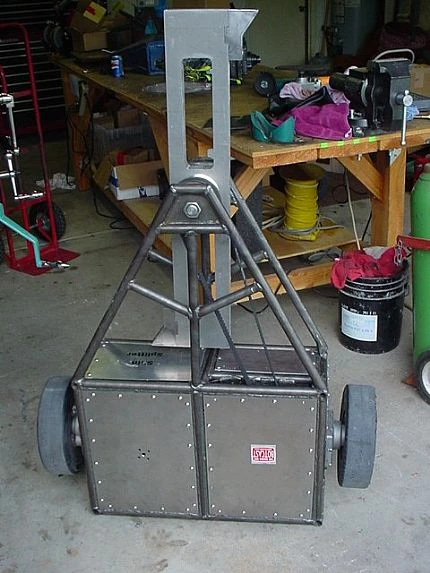
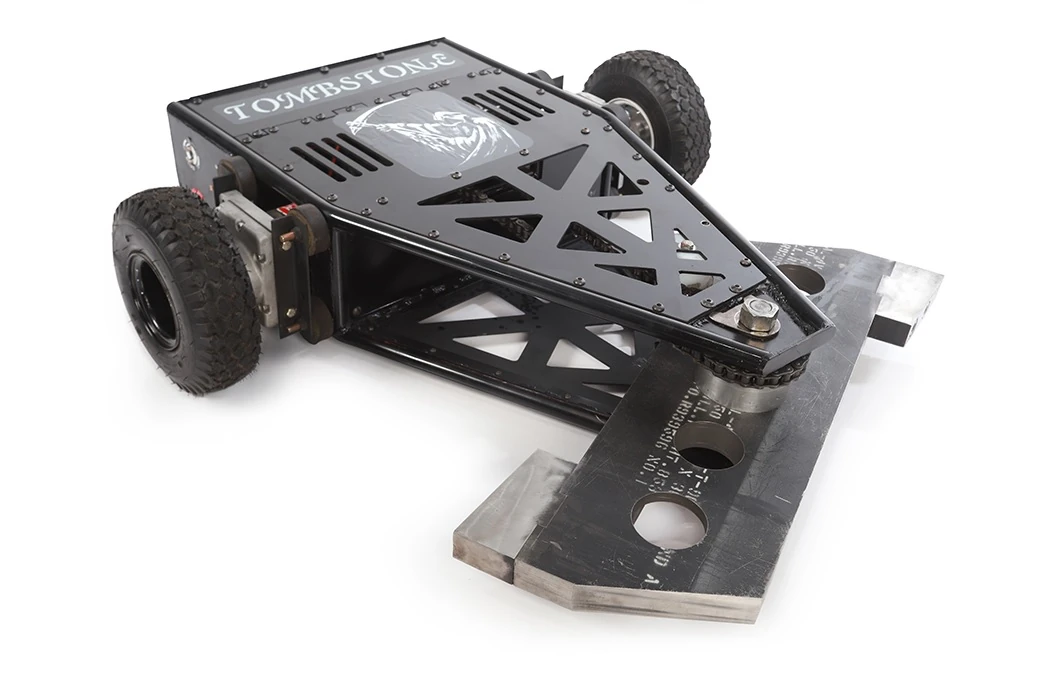
#9: Mortician/Shin Splitter/Last Rites/Tombstone
(Middleweight/Heavyweights/Super Heavyweight, 2004-Present, Hardcore Robotics)
Quick, pick a robot from the modern reboot of BattleBots! Did you pick Tombstone? You probably did. But, as you can see, the lineage goes back.
Ray Billings and crew have made a similar style of robot for the last 20 years, though I promise, not exclusively. But it’s what Hardcore Robotics is known for: a two-wheeled terror with a giant horizontal bar that, unless you have a way to counter it, will tear through your robot, Newton’s Third Law-style, the king of kinetic energy.
Hell, you can argue that that’s become the problem, as since the meta is the exact counter to this design, the only way out is through, and more power, making yourself the recipient of the Third Law. Tombstone’s still working on it, and I again have not yet watched any Pro League fights but I know Tombstone’s fate and will not spoil it if you haven’t seen them (but it went around on the horn).
Regardless, the results speak for themselves. Two Combots Cups with Last Rites, a super heavyweight championship in 2004 (with Tombstone), a long-awaited Robogames championship in 2024 (with Mortician) after eleven podiums but no golds with Last Rites and Mortician combined in the competition, and of course, a Giant Nut in Season 2 of BattleBots after finishing runner-up the year before. For over twenty years, the Hardcore stable has been the ultimate defense test for robots, and you can make a convincing argument that part of the modern meta’s evolution has been how to counter Ray Billings’s bots.
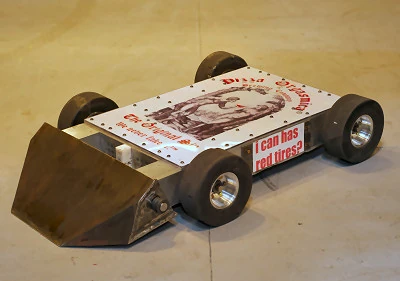
#8: Original Sin
(Heavyweight, 2006-2024, Late Night Racing)
And the answer to that question? Build a durable wedge. You don’t even need the vertical weapon!
It’s unfortunate that Matt Maxham’s Sewer Snake didn’t make the cut because it seems only right to have at least two of the Big Three of the heavyweight division right next to each other, the archetypal triangle of robotic rock-paper-scissors in the ’00s and early 2010s.
Original Sin might be why modern BattleBots has an active weapon rule. But to be honest? I would have been entirely fine with Original Sin, not its non-union Mexican equivalent Free Shipping, competing in BattleBots. Because the forklift, though hilarious, absolutely nerfed it. Okay, it had a vertical disk in Season 7, but that also doesn’t really count, I want full Gary Gin full-body ram madness!
Original Sin is one of the most decorated heavyweights of all time, winning Robogames eight times (2006, 2008-09, 2012-13, 2016-18), finishing on the podium two additional times, plus three Combots Cups. Its weapon? Itself. A wedge, a plow, four wheels, and its driving. Brutally simple, and brutally effective. The vertical meta today? Take the 4WD of Original Sin, give it more damaging potential. The best of the wedge bot while also adding damage. We’ll have more on wedges later.
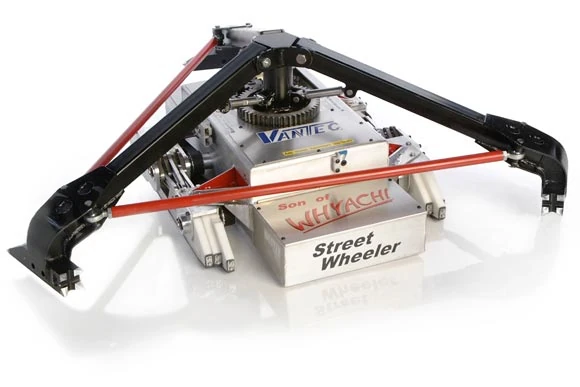
#7: Son of Whyachi
(Heavyweight/Super Heavyweight, 2001-2020)
A controversial pick for a controversial robot. We’re not really here for Son of Whyachi’s super heavyweight days in Seasons 4.0 & 5.0 of classic BattleBots, and we’re not even really here for its return in the modern era. We’re here for the Season 3.0 version.
Son of Whyachi was a heavyweight robot with an innovative shuffle-drive. Essentially, instead of wheels or tires, the robot moved on what was called a “three-phase walking beam” (source: the BattleBots Fandom wiki). As a result of this non-wheeled locomotion, the robot received the same weight allowance as other more “traditional” walker robots despite not having the full range of motion as the traditional stomping walker bot. This 50% weight bonus (from at the time 210 lb. in the heavyweight division to 315 lb.—it wasn’t 220 until Season 4.0) meant that SOW could put all that weight into its weaponry, which weighed 120 lbs.. That mass behind the spinning cage and its tipped hammers helped Son of Whyachi become an absolute wrecking ball in the division, winning the heavyweight title over BioHazard in an instant classic that saw BioHazard nearly get counted out, the wall get damaged, and all sorts of things. It’s still one of the greatest fights in robot combat history.
And then, combined with Robot Wars’s Drillzilla, which, thanks to a 100% weight allowance in Robot Wars, could have weighed as much as 440 lb. and weighed over 350, they needed to update the rules—it was beaten in the Robot Wars Second World Championship final by Razer. So, qualifying walkers (proper stomp bots) were given only a 20% weight allowance, shufflebots nothing. This kicked both Drillzilla (Dreadbot in BattleBots) and Son of Whyachi to the super heavyweights, with understandingly less success.
BattleBots did give a 100% weight allowance to proper walkers in the modern era (from 250 to 500 lb., but again, not shufflers, as there were rules to clearly define the range of motion that the legs needed to have. Even that is in the process of being phased out, as only Chomp actually competed as a walker, and Greg Munson and Trey Roski have talked about plans for a walker league (all walkers, weight limit of 250 lb.).
But it all started with Son of Whyachi taking the heavyweight division by storm. Similar to Ziggy closing out the super heavyweights, that’s influential.
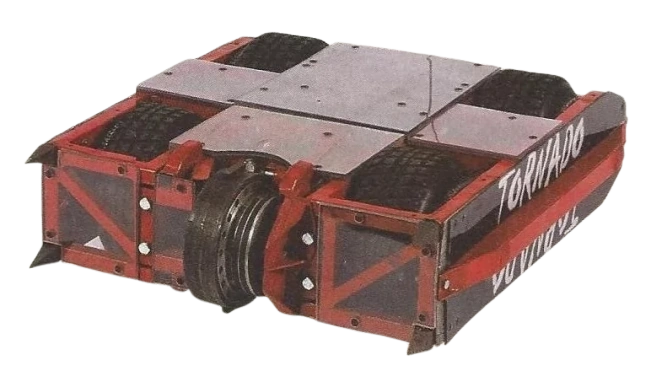
#6: Tornado
(Heavyweight, 2000-2022, Team Tornado)
As a Razer fan, it pains me to put Tornado this high. I would say Tornado didn’t cheat as much as it should have been something the producers needed to have stepped in if a robot had no way of properly fitting into the pit, but it did fit the dimensions they gave which I imagine includes being able to be pitted.
But that’s part why Tornado is 6th on this list and Razer isn’t. Tornado, a robot that first appeared in Series 4 of Robot Wars, won Series 6 in one of the great controversies of combat robot history where it sported an anti-crusher web. Its legitimacy and legality is one thing, but also the robot was as wide as the pit that Razer had it halfway down in the closing seconds of the fight. It took 40 minutes for the judges to deliberate on the fight, giving the victory to Tornado.
But the web is not the sole reason why this robot is here. Tornado was reliable, with an arsenal of weapons for opponents: a spiked scoop, a spike (that got scrapped), a lifting scoop, anti-spinner weapons that did get nixed by producers, the web, and its ol’ reliable, a vertical drum that added a bit of damage to the reliable box that Tornado was.
However, as it had started using the scoop more, and as a result of being a boxy predominantly-rammer, thanks to its win (and maybe also Storm 2’s New Blood tournament victory in Extreme 2), the powers that be made Series 7 of Robot Wars the first competition with an active weapon rule—all robots needed an active weapon, beyond just a plow/scoop/wedge. It needed to do something. Still, that meant more work for the drum, and Tornado still finished 3rd that season, losing to the aforementioned Storm 2 in the Grand Final Eliminator.
For interchangeable weaponry, reliability, a bit of controversy, and a rule that televised competitions follow to this day over 20 years later, Tornado juuust misses out on the top 5.
#5: Vlad the Impaler
(Heavyweight, 1996-2003, Team Vladmeisters)
One of the legendary robots of the classic era, archrival of BioHazard, Gage Cauchois was one of the best builders in classic BattleBots. Vlad the Impaler won two Giant Nuts, one in Las Vegas, one in Season 1.0, and runner-up in Season 2.0, in addition to super heavyweight Vladiator winning in Season 3.0 and being a close runner-up against Diesector in Season 5.0. And that’s not to mention a robot that’ll be later on this list that he was on the team for.
Vlad, however, was the flagship bot, first competing at Robot Wars 1996. And in a world where most bots looked like the kind of thing you’d throw together in the garage, Vlad was one of the few that weren’t. Sure, a bit boxy, but the lifting forks, and the internal workings—over its lifetime Vlad was the first bot to do things that bot builders do today: shock mountings (because what is robot combat if not a series of shocks to remote controlled vehicles!), magnets at the front of the robot to keep the lip closer to the painted metal floor, and maybe most outwardly noticeable, a dedicated self-righting mechanism—Vlad’s forks weren’t long enough to right the robot, so Gage Cauchois installed a piston on the top of Vlad to re-right it. It was ahead of its time, and it shows on the list, rightly deserved.
#4: BioHazard
(Heavyweight, 1996-2005, Team BioHazard)
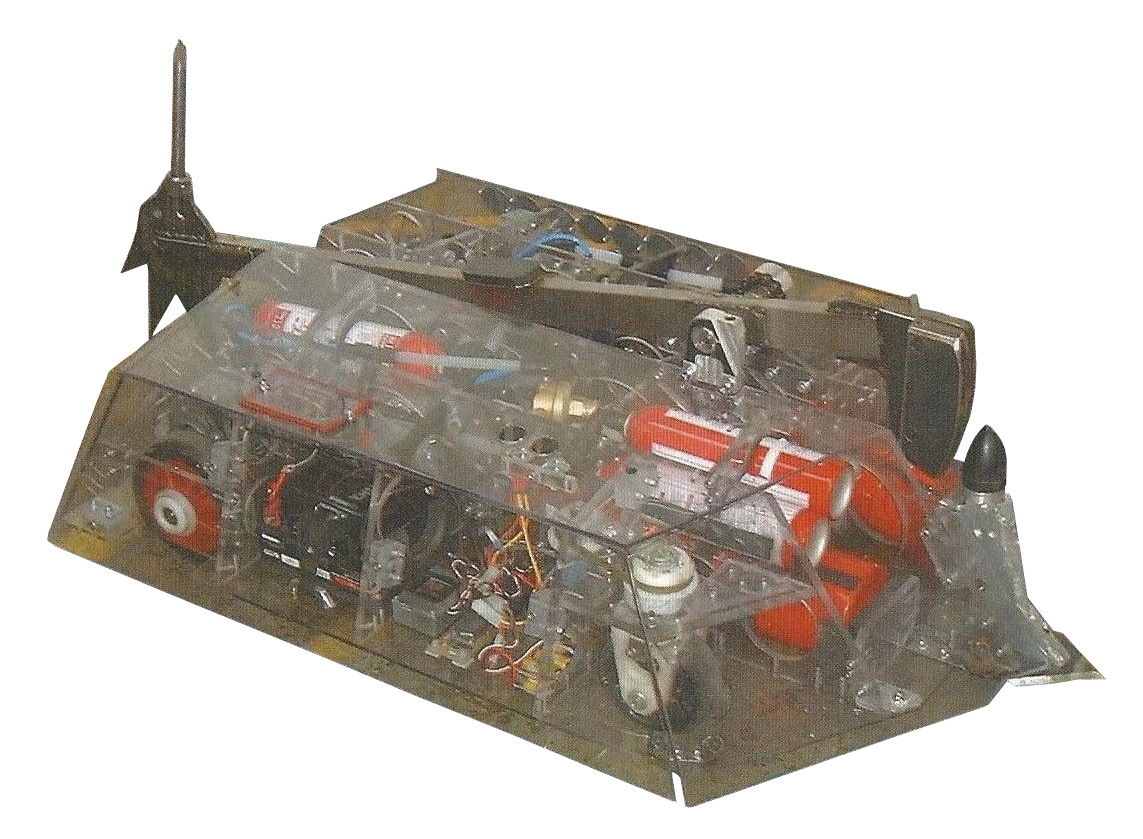
If this was greatest robots of all time, BioHazard would be top 3, without question. Top 2, probably. GOAT, no arguments here. Your arguments would be maybe Original Sin and… Hazard? Bite Force if Paul Ventimiglia had kept competing? Iron Awe? Its credentials are unparalleled: a 4-time BattleBots champion (LB 99, 2.0, 4.0, 5.0), 1-time runner-up (3.0), and a 2-time Robot Wars champion (1996, 1997). No other robot has won both Robot Wars and BattleBots. No other team has won both, as Warhead didn’t deliver a title for Team Razer and Cobalt has yet to do so for Team Carbide (now a subsidiary of the Robotic Death Company, though Tungsten won This Is Fighting Robots).
Yes, it’s influential for being iconic, but also for being the first robot to entirely be computer-designed. This is 1996, after all. The CAD design before all meant that BioHazard was meticulously thought out, from its hinged skirts, to its 4″ height, too low for some of the weaponry of the age, a low center of mass to hopefully prevent it from being tipped over, hinged skirts to keep its ground clearance and prevent anyone getting underneath (though those were added in 1997).
And with all the talks of self-righting and self-righting mechanisms, it was not Cassius in Series 2 of Robot Wars or Vlad with the piston, but BioHazard that’s believed to be the first robot to successfully self-right, fighting, who else, archrival Vlad the Impaler in their first meeting in 1996.
6,600 words in or so, and here is our top 3:
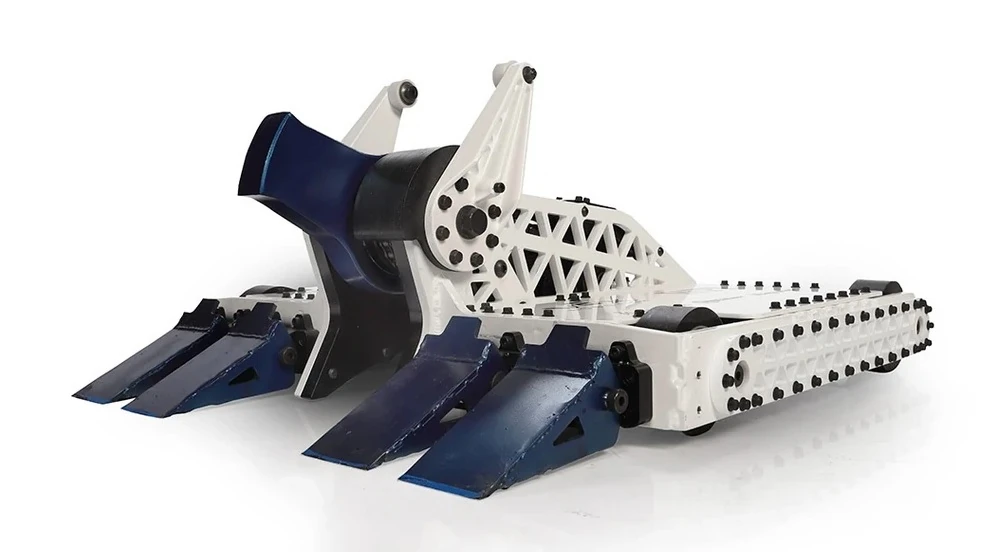
#3: Bite Force (II)
(Heavyweight, 2016-2019, Aptyx Robotics)
The top two were easy as soon as I thought of this idea. Which means really, this list begins at #3. So why Bite Force over BioHazard and Vlad? It’s simple:
The modern meta is a power vacuum of robots trying to be the next Bite Force. It’s a lot of four-wheel drive vertical spinners with wedgelets trying to find the optimal way to get under their opponent and deliver their weapon.
And none of them are quite Bite Force. End Game is closest, sure, but the wedge and fork design takes things to 11. Bite Force had different configurations, but it seemed simple and brutally easy. It wasn’t the biggest or fastest vertical weapon, but it broke bars, Tombstone’s and Icewave’s, making quick work of both bots. It did damage, gutting HyperShock. It just beat you.
If not for a chain snipe by Chomp in a season where everything was decided by active weapon damage in judges decisions, Bite Force may be undefeated—updated scoring rules might have still given Bite Force the win. Instead, between the two configurations it was “only” 26-1, sporting a 19-fight win streak thanks to running the table in Seasons 3, 4, and the re:MARS competition.
The field is still chasing Paul Ventimiglia after three seasons away from BattleBots.
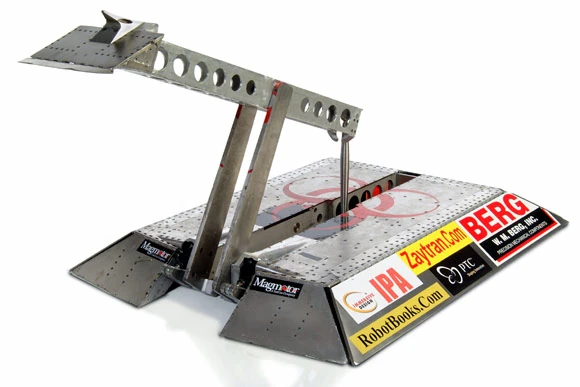
#2: Blendo
(Heavyweight, 1995-2001, Team Blendo/M5 Industries)
Yes, that M5 Industries. This is Jamie Hyneman and Adam Savage’s robot.
Blendo is almost mythical. It competed in the 1995 and 1997 Robot Wars, and both times it fought twice and then was asked to withdraw from the competition in exchange for co-champion status. The reason is because thanks to the damage that Blendo was able to inflict on its opponents, it was a safety hazard. Because the extent of the barrier of the wall in 1995 was a 6-foot plexiglass wall, and in 1997 the wall was maybe a little higher but a shard of Hercules breached said wall.
Yeah, so Blendo is why we have proper robot combat arenas as opposed to fighting it out in parking lots. With polycarbonate walls and ceilings, and enough thickness to not have metal go through it and potentially cause a lawsuit.
Once we had arenas like that, Blendo could compete normally, though robotic armor had also caught up with Blendo’s destructive capabilities, so in BattleBots it was nowhere near as effective. But in terms of influence, safety rules are written in blood and near lawsuits. Which leads to #1.
#1: La Machine
(Middleweight/Heavyweight, 1995-1997, Team La Machine/Impact Media Group)
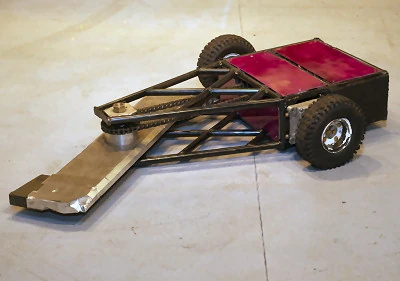
Admittedly the list started and ended here when it came to #1. La Machine is the most influential combat robot of all time for two reasons: the birth of the wedge, and because two of its builders then went on to create a little robot competition called BattleBots. (The third one was the previously mentioned Gage Cauchois.)
The second one is simple enough, so the first one’s the fun one. Cauchois had the idea for this one. Basically, take a jet ski ramp, and instead of ramping up it, have the ramp be the aggressor. Rampee goes flying, profit. Then apply some cooking spray for lubrication and repeat, with Trey Roski driving the thing. As a result, La Machine won the middleweight competition in 1995 and the middleweight and heavyweight melees. A larger version with a scoop then finished 2nd in the heavyweight competition the following two years to BioHazard, but still won the 1996 heavyweight melee.
La Machine went globetrotting, apparently being asked to compete in the 1995 UK Open, kind of a pilot for what would become the UK Robot Wars, winning that competition over The Master and apparently (according to the Robot Wars Wiki) throwing a stock robot past the arena boundaries, making it, not Chaos 2, the first robot to throw another out of the arena. So, hell, give it that as well.
The low man wins. La Machine was the robot realization of that, and it’s been one of the principles of robot combat for over 30 years, through today.
As for the second part, I don’t think we need to get into it. And as for people disagreeing with me, apparently someone made a video of this exact thing that I just spent over 7,000 words building up to. Well that’s disappointing.
So there you have it, an entirely subjective, going to get me flamed mercilessly on forums list of the most influential robots of all time. Honorable mentions to Diesector, Sewer Snake, Ziggo, Mechadon, Panzer/Wrath, Ramfire 100, HUGE, and Clyde and/or KaZaA Lite, but there were only 32 spots.
This list was a massive undertaking that I procrastinated on for far too long, and I’d like to thank
-The Robot Wars Wiki
-The BattleBots Wiki
-The Robot Combat Archive
-The NHRL Wiki
-The Robogames Wiki
-The Combat Robot Hall of Fame
for their archives making it possible to do this research.
I’m Senor Weaselo. Thank you for reading this tome and good night.








Leave a Reply
You must be logged in to post a comment.