![[DOOR FLIES OPEN]](https://doorfliesopen.com/wp-content/uploads/2015/08/DFO-MC-Patch.png)

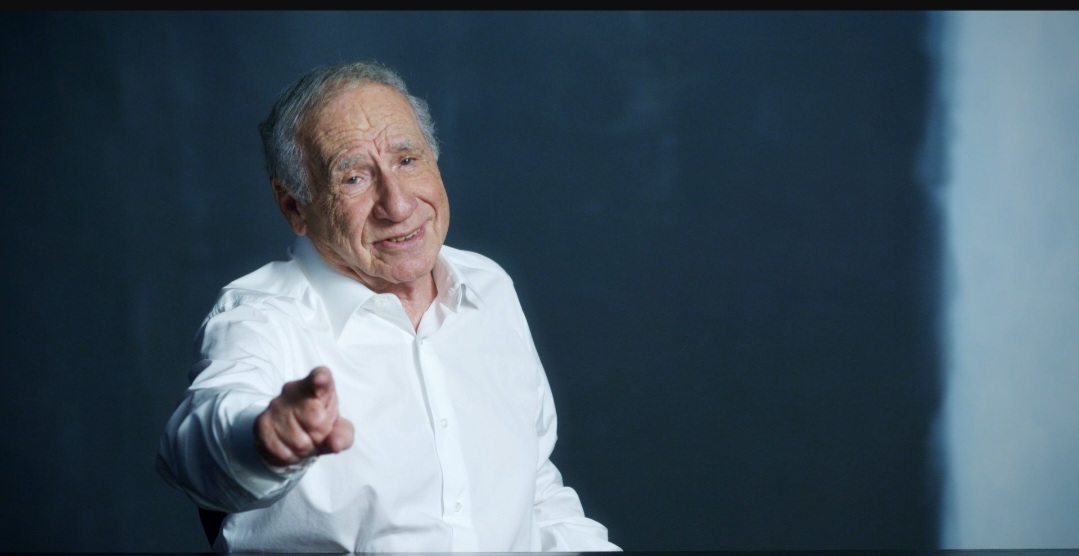
I must have been five years old when my father took our family to see “Silent Movie” in the theatRe. I got into it immediately. Everything was self-explanatory, one gag after the other, very little dialogue: great for a kid with basic reading skills and knowing almost no English. Then the pong scene came on:
I laughed and laughed and laughed uncontrollably, the first time I utterly and completely lost all of my shit out of pure joy. That I remember: my cousins say that I chewed on a squeaky toy as an infant and shit myself from laughing. Well, records from that era are spotty at best. Besides, it was the seventies; everyone was either drunk, high, or repressing memories.
Back then, my father had taught me not to judge people and to keep my nose out of other folks’ business. These lessons prove their immense worth to me every day. Equally paramount paternal lesson, comedy is The Shit and Mel Brooks is a genius. This is what I remember from everything I’ve, read, watched, and heard about Brooks.
Brooks is 95 years old and still working. He was born Melvin Kaminsky in Brooklyn, the youngest of four boys. His mother became a widow when Mel was 2 and his older brothers, aunts, and uncles contributed to push the family ahead. The family did not keep kosher but grandma lived on the same building. They hid the food every time they felt grandma coming up.
Since childhood, Mel wanted to be show business. He figured “Melvin Kaminsky” would be a tad… Ethnic for showbiz. Mel considered his mother’s last name, Brookman. By the time he was 14, Mel was doing bits for Jewish vacationers in the Catskills and was also a drummer. Mel happened to be friends with Buddy Rich’s kid brother. Once Mel went over to their house and played a tune on Buddy Rich’s kit. Buddy overheard Mel play to one of his records, and said from the other room “Not great, not bad”.
“Mel Brookman” was too long to put on a bass drum. So the -man was out, S was in, Mel Brooks.
Just after World War II ended, Mel Brooks was stationed in Germany, near the French border. In the town he was assigned, an inn had a two-sided painting inside. One side had the Kaiser, the other had Napoleon. They’d switch depending on… Things, I guess. I remember reading that, during that time, Mel got stationed with a group of other entertainers to put on shows for troops. A violinist was appointed to be his driver and I remember reading (maybe in one of those loooong old Playboy interviews), that he would’ve been happy to spend his life with the violinist, hearing her play Brahms and screwing her every available chance. The anecdote got cleaned up in “All about Me: My Remarkable Life in Show Business” (2021).

I stand by my pervy memory.
Brooks returned to the U.S. in 1946 and eventually hooked up with Sid Caesar, for which he submitted material for his solo act, before TV. They both got into the “Show of Shows”, which included Imogene Coca and Carl Reiner—no slouches in the comedy field themselves. Reiner was also Mel’s BFF until death. I read that, once in the writer’s room Caesar claimed Brooks thusly:
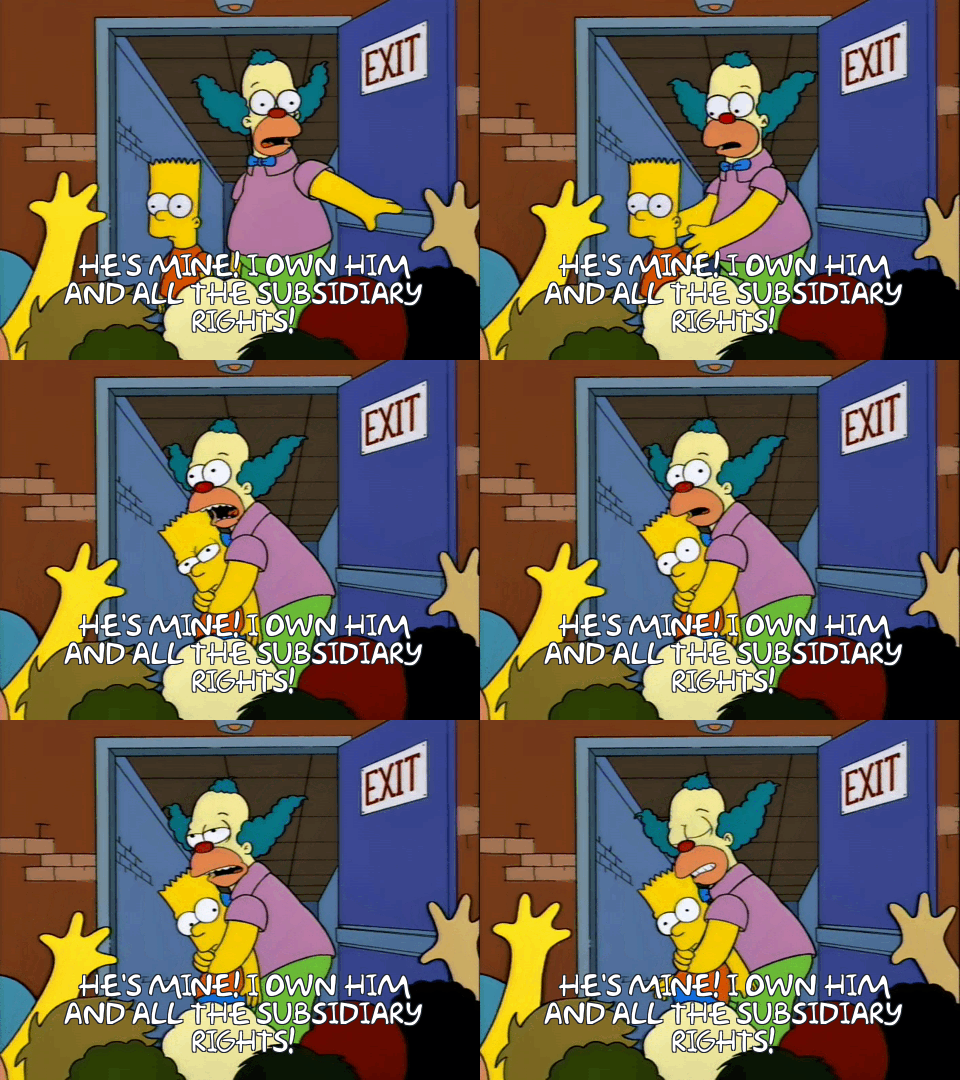
I read an interview where Mel said he sometimes suffered panic attacks and threw up in the sidewalk going to work as a writer for television. But no one remembered Mel being quiet or even predictable. He once barged into a big corporate meeting just to spite Sid Caesar’s manager. That manager hated Brooks so much he threw lit cigars at Mel when the horseplay and yelling got too much. During that time, Brooks was fighting for jokes in a writing room that included Neil Simon, Woody Allen, and all three were up to their knees in the original writers from M*A*S*H.
Around 1960, Mel Brooks met Anne Bancroft,
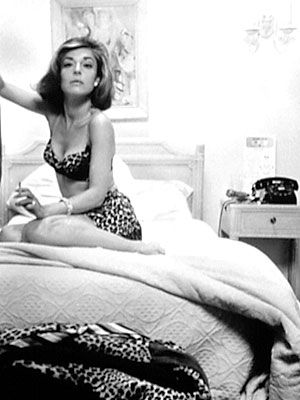
, to whom he eventually married. Bancroft said Brooks conquered her through boldness, charm, and sense of humor. See? The stuff ladies say about personality does work. It took several years for them to marry, Brooks says, because he did not have a steady paycheck. Then he developed “Get Smart” with Buck Henry, of whom Mel speaks glowingly in the 2021 book. But! From earlier interviews, I remember two things about that working relationship with Buck Henry. The first is Brooks saying that Henry’s only writing, at Get Smart, was putting his name on checks. The second thing has a similar theme.
Since the early 60s, Mel and a group of friends met regularly for dinner at a Chinese restaurant. The diners were mostly writers and artists, some struggling or worse (blacklisted). They ordered several dishes but hit the rice hard to, you know, save money. Buck Henry once crashed one of those dinners and ate a lot of the dishes but very little rice. Never again. Quality spite like that, you have to take it seriously. Saving grace: the Cone of Silence was Buck’s idea. Rest in Peace, Mr. Henry. The Graduate was OK but the plastics joke sucked. Though folks seem to like it, fine.
As a follow up to Get Smart, Mel Brooks made some of the most incredible films in history.
SPROTS TONITE
The Twelve Chairs (1970)
Mel’s second film, from 1970, set in newly-bolshevik Russia. It was Frank Langella’s first screen role and I saw it as a teenager. It has a semi-hysterical Dom DeLuise (great), and Mel appears briefly as a very funny sniveling serf. The title song is wonderful and a handy guide to loife: “Hope for The Best, Expect The Worst”:
Dracula, Dead and Loving It (1995)
Leslie Nielsen’s last starring role and it has Harvey Korman and Peter McNichol—two must-watch actors, IMHO.
Life Stinks (1991)
I watched it, Brooks is a CEO that hits the skids. I do not remember much, except the ashes gag–years before The Big Lebowski!
Robin Hood Men in Tights (1993)
Dave Chappelle’s film debut and a pretty funny movie. Richard Lewis is great, although, to be fair: I would watch Lewis kvetch over car keys for half an hour.
To Be or Not To Be (1983)
A not-really remake to Jack Benny’s 1942 film. It stars Anne Bancroft and Mel as owners and actors of a Polish theater during the Nazi occupation. Christopher Lloyd and Charles Durning are hilarious as incompetent Nazis. Great, funny movie. And AND, the late, wonderful José Ferrer is in it. Memorable line, after the Nazis take over the theater and hand over a censored list, an irate Brooks says: “You can’t have theater without k*k*s, f*gs, and g*ps**s!”
Spaceballs (1987)

I love, love this movie.
History of the World, Part I (1981)
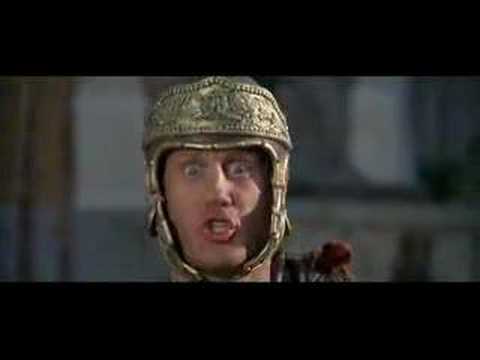
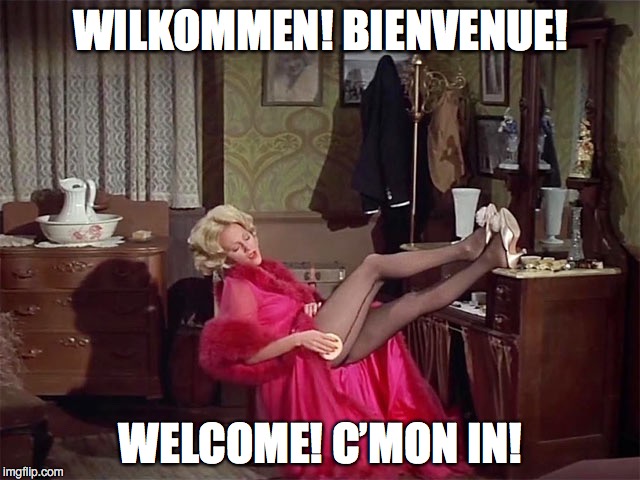
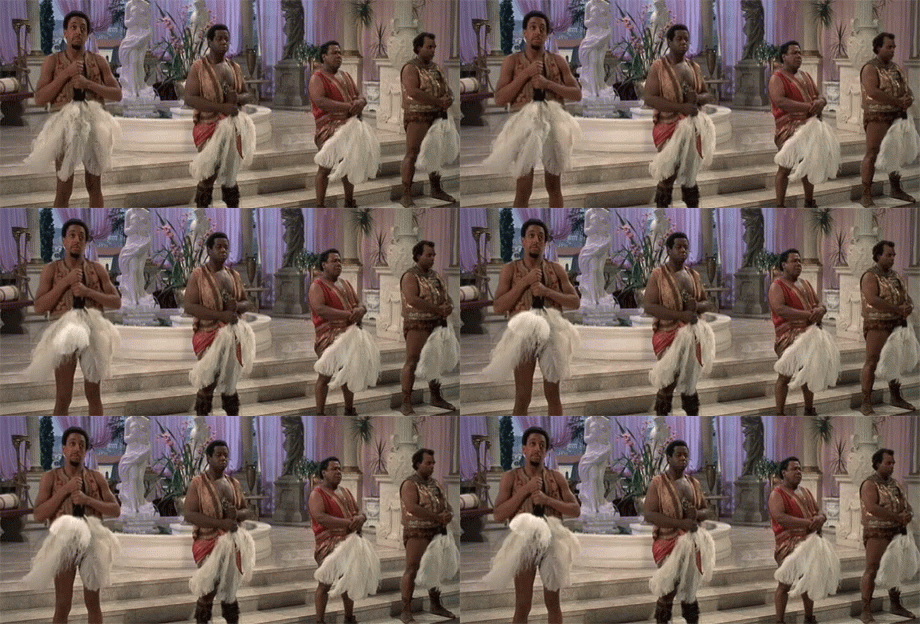
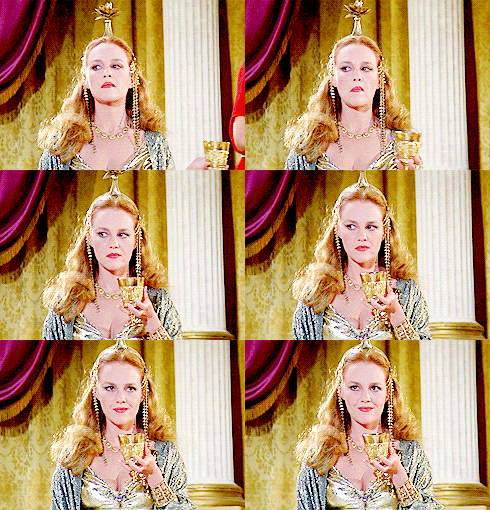
Gregory Hines’s first film role and… OK, not one of my faves. My father took me to watch this movie when I was ten or less, and I was mostly puzzled. I kinda knew they were talking about sex, but all the situations and jokes went over my head. And did not remember this move being that funny. I watched it again last night. Woof. Yeah, some setups are corny and there’s some lazy f*g-shaming, but oh my god… Dom DeLuise is so freakin’ decadent and hilarious as Caesar—I had to pause from laughing after Caesar gets annoyed and halfheartedly throws a quarter chicken at a servant. Madeline Kahn eats up the screen and I got to relive my awkward tingling during the orgy casting scene. The movie is also very in-your-face against the church and the powerful, which also went waaaay over my head as a child.
On reconsideration: good!
OK, now come the masterpieces (YMMV)
High Anxiety (1977)
The Hitchcock spoof, so so good.
My two favorite comedy bits, all time, are (in no particular order):
- The Simpsons’ off-camera pitter-patter of feet, car starting and peeling off
- High Anxiety’s coffee table scene
You know the one! I couldn’t find it on You Tube. Drag. Anyway, Harvey Korman and Nurse Diesel are plotting while having coffee and pastries and the shot is from under a glass table and they keep putting stuff on the table so the camera has to move and omg HAVE SOME STRUDEL 😂🤣
This movie is a masterpiece on all levels. Story time! Brooks sought out Alfred Hitchcock to get his blessing to parody his films. Hitchcock was enthusiastic and even gave notes to Brooks over several lunches. Hitch even pitched a gag: the hero is running away, the pursuers are closing in on him, and the hero has to turn to a pier. A ship is seen moving, about 12 feet away from the pier, and the hero jumps on it. But the ship, instead of going away, is coming towards the port, quite the Simpsons-esque gag, if you ask me.
Brooks liked it but did not use it. “We didn’t have the money”, Brooks explained. Classic Brooks: for all the mad man reputation, he was hella organized. He prided himself in bringing in his movies under budget and had a strict work schedule. During rehearsals, rewriting and improvisation was encouraged. But once you start filming, it’s stick to the script or else.
Silent Movie (1976)
The movie I watched most during my childhood. Every time it came in cable, watched it. I had a friend who got the first VHS in my neighborhood. His dad bought Silent Movie and I always asked to see it again–instead of doing stupid stuff like play basketball or get some air. Hilarious and surprisingly clean. Even Marty Feldman’s pervin’ is on the D. L. Nothing sags in this film and I have a feeling it might be perfect.
Young Frankenstein (1974)
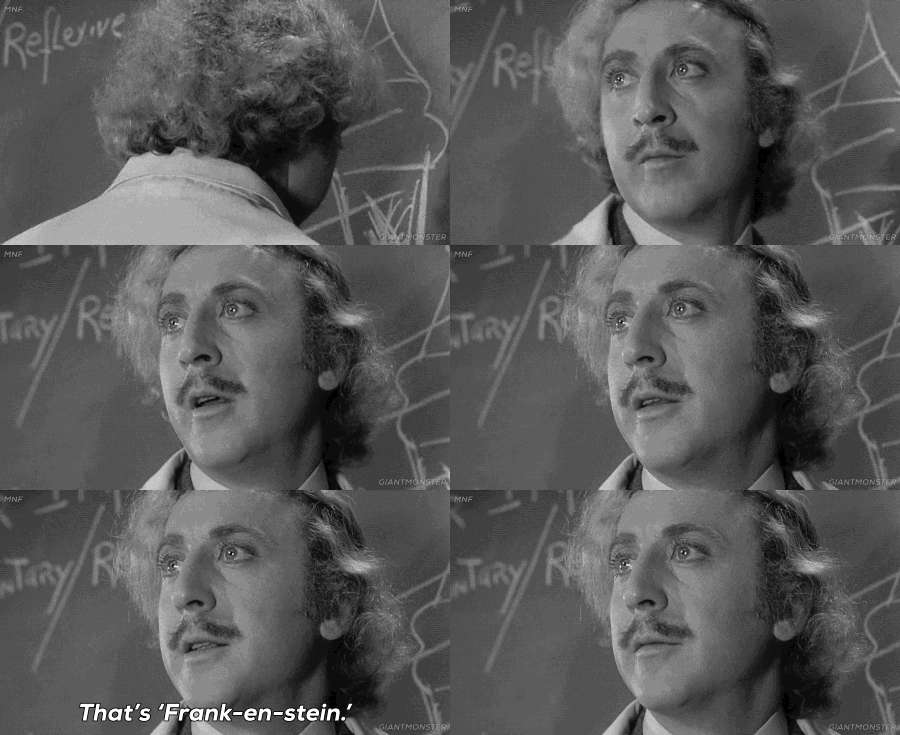
Perfect film #2. It is beyond wonderful. At the time it was made, it was the most faithful rendition of the Mary Shelley novel. It had the blind man (Expresso!!!), the little girl episode, and the heartbreaking “If I could not inspire love, I would inspire fear” monologue. The acting is superb and and… I can’t say enough about it. I wanna watch it again now.
Blazing Saddles (1974)
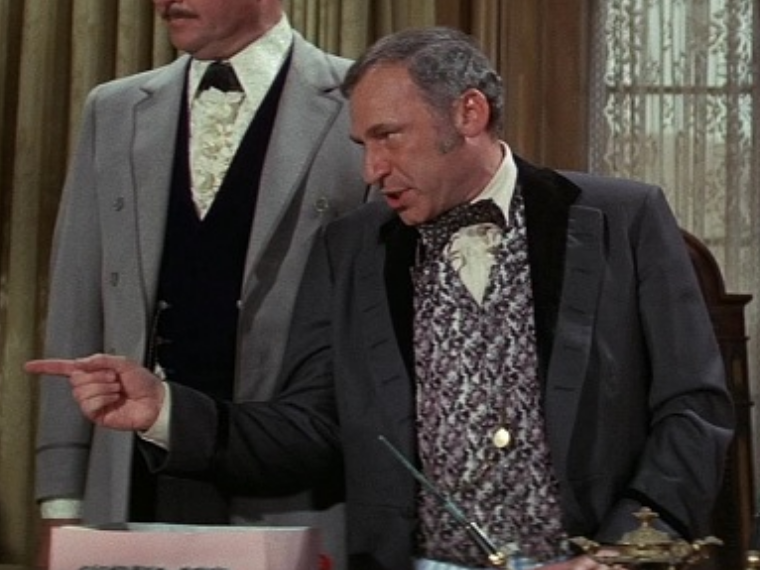
The first time I saw it was the cable version, during the 80s. Which was pretty unexpurgated (compared to now), but then I watched the original on VHS—without commercials or dubbing. It was the most shocking, funny, righteous and anarchic movie I have ever seen. “Never give a saga an even break” said the tag line, and damn: that film took a shot at everything, with racism and moviemaking taking the brunt. A damn treasure.
About Richard Pryor: I read recently that Brooks wanted him to play Black Bart but no studio wanted Pryor for the lead for, uh… Dependability issues. The studio wanted Cleavon Little and Mel threatened to quit. Pryor said to Mel he was fine with just being a writer for the film, so he could keep getting paid. Besides, Pryor said: he was light brown and may have looked kinda Cuban, but Little would have pissed off all the rednecks.
The Producers (1967)
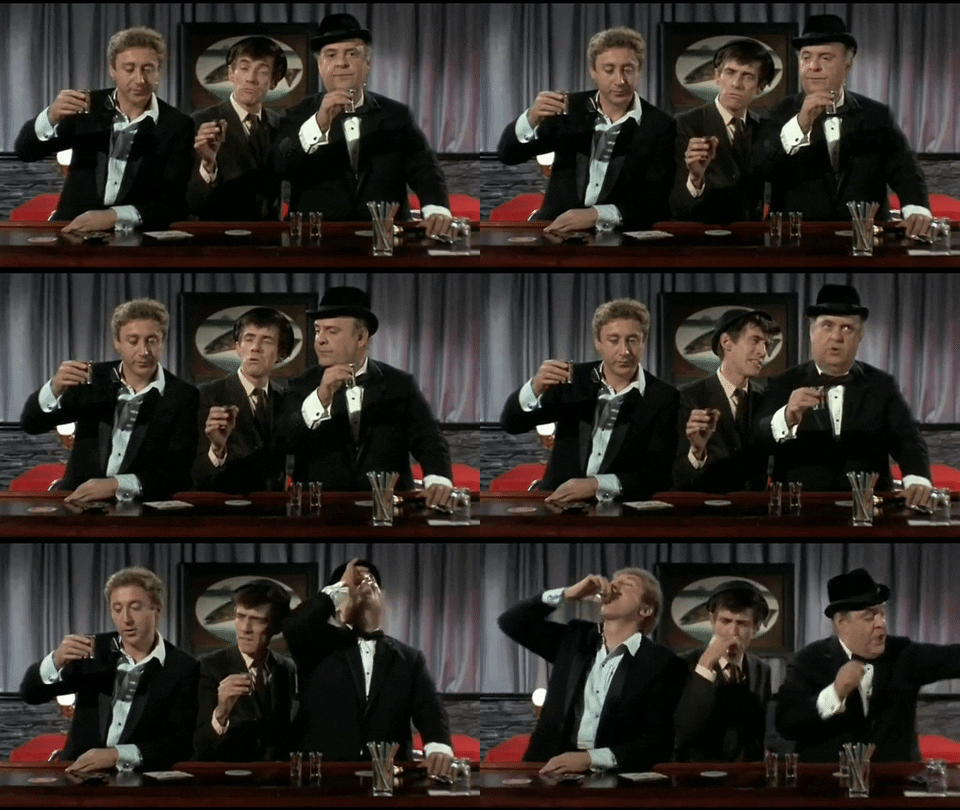
Sometime in the early 90s I saw this movie carton on a video rental place. I knew nothing beforehand, except Gene Wilder and Mel Brooks. I was stunned at how freakin’ outrageous and hysterical this movie was. And the talent! No disrespect to Matthew Broderick and Nathan Lane (who are dynamite), but Gene Wilder and Zero Mostel are otherworldly.
For me, “Rasing Arizona” has the best beginning of all movies. The Producers is second; the setup is very quick and the jokes are nonstop.
[mocking] Caught you with the old lady… Come in, Mr. Tact.
Oh I hurt your feelings. Good!
I’m in pain! And I’m wet! And I’m still hysterical!
-Let’s assume just for a moment that you are a dishonest man.
-Assume away.
Kenny Mars’s Nazi is great, a dumb lump of Hitler love that was kooky but not that threatening. His role in Malcolm in the Middle was like a kinder, gentler version.
The recent musical did have a great joke that was not in the original. When Max and Leo go to the Director’s house, the manservant asks them: “May I take your hats, your coats, and your SVAS Tikas?”
This is my favorite movie. Hands down. The other time I was thoroughly blown away was reading Catch-22 for the first time: two days reading non-stop, just thinking “Whaaaa… How can someone think this way and do [stammer, with hands] THIS?!” Same with The Producers. Fun fact: Joseph Heller was one of the regulars at those Mel Brooks Chinese dinners.
FINALLY,
“History of the World – Part 2” starts tomorrow in Hulu. Hells yeah I’m gonna watch. Have a great week, sickos.












Leave a Reply
You must be logged in to post a comment.