![[DOOR FLIES OPEN]](https://doorfliesopen.com/wp-content/uploads/2015/08/DFO-MC-Patch.png)


As I advised to several of you over the weekend, it’s sometimes a lot better to watch the fútbol on the Spanish channels as they have hot Latinas in the broadcast and in the commercials.
While watching those broadcasts, you may be practicing your Spanish and hearing the announcers referring to the teams by certain nicknames which you, naturally, have no idea what they mean or who they refer to.
Today, I aim to rectify this wrong and provide you with a little insight into our southern neighbors. First off, let’s check your general knowledge.
In the table below, you will see countries and nicknames for the citizens of those countries. Your task is to match them up:
| Country | Nickname | ||
| 1 | Guatemala | A | Catrachos |
| 2 | Honduras | B | Ticos |
| 3 | El Salvador | C | Canaleros |
| 4 | Costa Rica | D | Pinoleros, nicoyas |
| 5 | Panamá | E | Chapines |
| 6 | Nicaragua | F | Cuzcatlecos |
Think you’ve got them all?
Let’s go through them one by one, from South to North:
Panamá = Canaleros
This one is fairly simple. Canal is the same word in English as in Spanish. They both refer to this:

Someone from the canal country is a canalero.
Costa Rica = Ticos

You may have guessed this one by thinking that Tico or Tica sounds a lot like a contraction of Costa Rica said really quickly. However, that’s not actually the reason for the nickname.
In Spanish, you can add “ito” or “ita” instead of “o” or “a” at the end of a word to give it a smaller size or, more colloquially, a special fondness. In Costa Rica, the people use “tico” or “tica”. Hence, Costa Ricans like to call themselves Ticos or Ticas. It denotes a fondness for their fellow Costa Ricans.
Nicaragua = Pinoleros, nicoyas
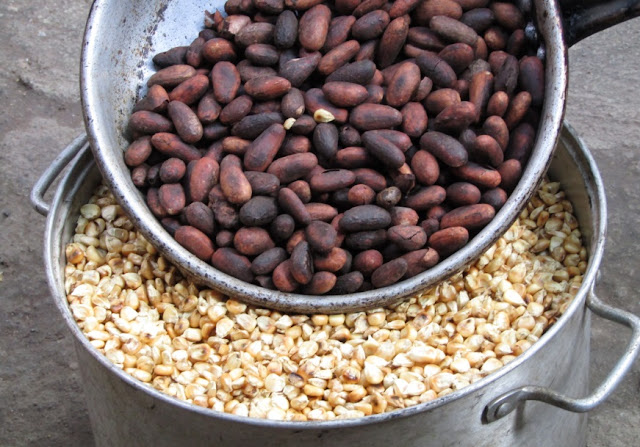
This one is a little bit tougher. Nicaraguans have two and sometimes three nicknames that they go by. The first one is the most obvious one and that’s why I didn’t include it: Nicas. That’s simply a contraction of Nicaraguans or Nicaragüenses in Spanish.
Nicoyas is similar to nicas but it’s slightly altered to make it more familial. Adding the “oya” makes it more of a term of endearment. The word is still derived from Nicaraguan/Nicaragüenses.
The last one has an interesting history. It is said that the term “Pinoleros” is derived from the word pinol, a form of toasted ground corn that is the main ingredient for Pinolillo, a powdered form of the pinol which is used in a variety of Nicaraguan cuisine and beverage preparations. Historically, indigenous tribes in Nicaragua depended primarily on corn-based products as their primary food staple. Given that they have used a lot of pinol in their history, the name “pinoleros” or “people that use/like pinol” stuck.
Honduras = Catrachos

This one is also grounded in history and, crazily enough, it involves asshole Americans! You see kids, in the late 1800s, slavery was, you know, OUTLAWED in the United States after the Civil War. However, there were assholes that were not too happy about that and ventured south of the border (south of Mexico, to be exact) to see if they could bring slavery back in another part of the world.
These asshole Americans were called freebooters or filibusters. One particular asshole named William Walker was an American physician, lawyer, journalist and mercenary who organized several private military expeditions into Latin America, with the intention of establishing English-speaking colonies under his personal control, an enterprise then known as “filibustering”. Walker usurped the presidency of the Republic of Nicaragua in 1856 and ruled until 1857, when he was defeated by a coalition of Central American armies.
One of the leaders of the Central American armies was a Honduran general named Florencio Xatruch (pictured above). As the general and his Honduran/Salvadoran soldiers returned from defeating Walker’s forces, some Nicaraguans yelled out ¡Aquí vienen los xatruches!, meaning “Here come Xatruch’s boys!” However, Nicaraguans had so much trouble pronouncing the general’s last name that they altered the phrase to los catruches and ultimately settled on los catrachos.
From that point forward, Nicaraguans referred to Hondurans as “Catrachos” and the use of the nickname spread throughout Central America. Btw, the term “filibuster” that is used for Congress hearings came from this original meaning.
El Salvador = Cuzcatlecos

This one has historical native people origins. Sophisticated civilization in El Salvador dates to its settlement by the indigenous Lenca people; theirs was the first and the oldest indigenous civilization to settle in El Salvador. The Lenca were succeeded by the Olmecs, who eventually also disappeared, leaving their monumental architecture in the form of the pyramids still extant in western El Salvador. The Maya arrived and settled in place of the Olmecs, but their numbers were greatly diminished when the Ilopango supervolcano eruption caused a massive Mayan exodus out of what is now El Salvador.
Centuries later they themselves were replaced by the Pipil people, Nahua-speaking groups who migrated from Mexico in the centuries before the European conquest and occupied the central and western regions. The Pipil were the last indigenous people to arrive in El Salvador. They called their territory Kuskatan, a Pipil word meaning The Place of Precious Jewels, backformed into Classical Nahuatl:Cōzcatlān, and Hispanicized as Cuzcatlán. The people of El Salvador today are referred to as Salvadoran, while the nickname Cuzcatleco (someone from Cuzcatlán) is commonly used to identify someone of Salvadoran heritage.
In pre-Columbian times, the country was also inhabited by various other indigenous peoples, including the Lenca, a Chilanga Lencan-speaking group who settled in the eastern highlands. Cuzcatlán was the larger domain until the Spanish conquest.
Guatemala = Chapines
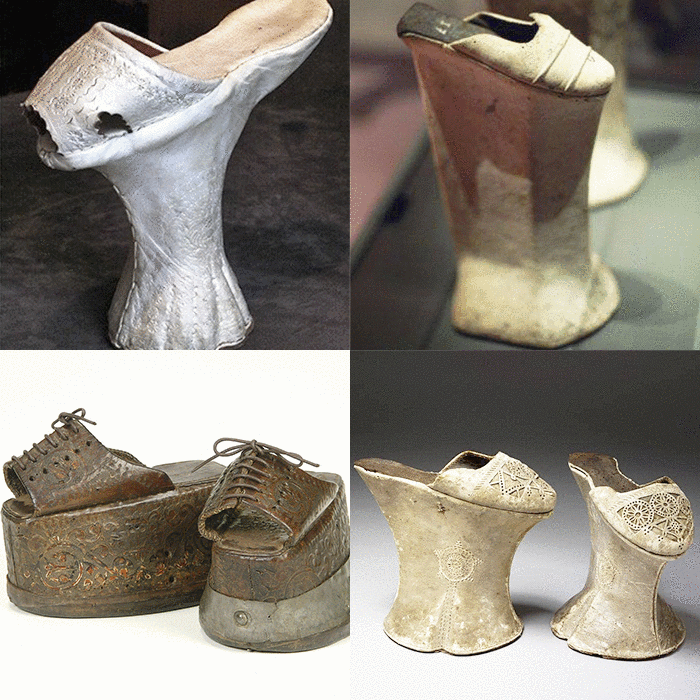
I’ve saved the most obscure one for last. The chapín or chapines were a type of platform shoe that came from Spain that was very popular in the 15th century. The name of the shoe was onomatopoeic as it mimicked the chap chap chap sound that was heard as people walked down cobblestone streets in those shoes.
Besides the phonetic and literal meaning of the word, chapín was also used as a contemptuous term to describe Spaniards living in the city of Santiago de Guatemala. After the political changes and independence in the 19th century, the contemptuous connotation increased in its reference to anyone from Santiago de Guatemala.
As time passed, the shoe which spawned the word disappeared and the connotation of the word turned from negative to positive and popular. Nowadays, Guatemalans refer to themselves as chapines in an affectionate way.
***
I don’t expect you all to go out and watch the Gold Cup, but at the very least you’ve hopefully learned something new today. Now, if Don T can write a post about why Puerto Ricans are called boricuas…
(74/69)











Leave a Reply
You must be logged in to post a comment.