![[DOOR FLIES OPEN]](https://doorfliesopen.com/wp-content/uploads/2015/08/DFO-MC-Patch.png)


Rio de Janeiro is one of the most beautiful cities I have ever been lucky enough to visit. Check that. The locale is the most beautiful place in the world in which to place a city. As my plane was landing oh so many years ago, all I could think of was the early explorers discovering this location and saying, “Yeah, THIS is the spot!” Or the equivalent in Portuguese.
Until my trip to Vancouver last year, I had only visited two cities in the world where I felt at home and not like a tourist. Cities where I felt comfortable enough to consider living there if I ever won the lottery. Barcelona is one of them. Rio de Janeiro is the other.
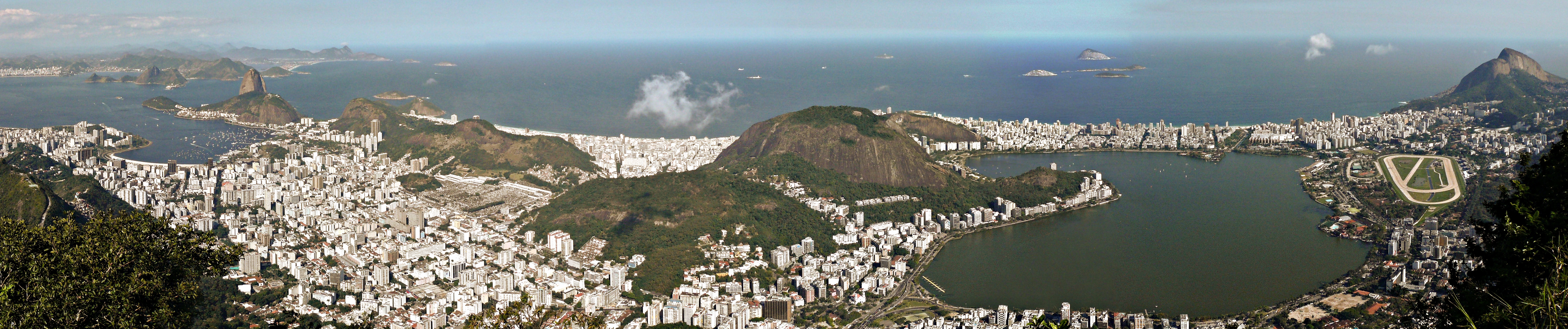
The circumstances surrounding the trip were…. complicated. That is not my story to tell, it is my best friend’s, so I’ll avoid talking about that. Suffice to say that we stayed at his ex-girlfriend’s apartment in the Santa Teresa neighborhood. At the time, it was coming off a reputation for being a rough neighborhood and was becoming a bit of an area for artists. I won’t call it hipster or gentrified because hipsters wouldn’t want to live there. Not yet anyway.

The buildings were old and weathered, but brightly painted and beautiful. It felt like we were in another time. Certainly not the post-9-11 world. Definitely turn of the century, but the previous century. The apartment had a big wide window in the living room that opened up towards the mountains, which we were actually on as the Santa Teresa neighborhood sits atop and adjacent to central Rio. The view was magnificent. Located directly in front of the window was a large Brazilian style hammock. It was perfect for sitting/lying down and watching the rain come down on the rainforest. And when I say rainforest, I mean it. The Tijuca Forest is pure tropical rainforest, threatening to take over the city at the first opportunity. I spent quite a lot of time on that hammock. Lying on the hammock with an open window as the rain fell was how I fell asleep the first night. I never felt so at peace.

To get into town, we took the Santa Teresa tram or Bonde, affectionately called the Bondinho, down the hill across the Lapa Arches and into downtown Rio.

It opened in 1877 and is one of the oldest railways in the world and the oldest electric railway in Latin America. Riding it was an adventure, but it was awesome. As you can see in the picture above, there are no doors and the fence preventing anyone from falling over the arches was flimsy at best. We took it every day we were there. Some years after we were there, there was an accident that shut down the line. To this day, full service has not been restored. Supposedly, they were going to do it for the World Cup in 2014 but…. and then for the Olympics, but….
At least, from what I’ve heard, they’ve painted the arches upon which the train travels as it makes its final descent into downtown (which are the remnants of the Carioca Aqueduct) all white for the Olympics. That’s…something. And, if you visit for the Olympics, the train will go across the arches once more. Maybe not much further, but, again, that’s… something.
Which brings me to why I am writing this post in the first place. There is a feeling I get sometimes that strikes me to the core. It’s a sense of knowing that while things are not okay or perfect or good or, many times, quite shitty, there is something important and beautiful and worthwhile to be found in them. That, to me, is Rio and Brazil in a nutshell. It might as well be the Olympics, for that matter.

I was born in Mexico City. I lived there through most of the 70s. There is an old saying in Mexico that says that when the US sneezes, Mexico gets the flu. As you may remember, the 70s in the US were not the best of economic times. You can imagine how it was in Mexico. As I walked through downtown Rio, it reminded me a lot of 1970s Mexico City. There is a mix of architecture from colonial times right alongside “modern” buildings. Modern, of course, being from the 60s and 70s. It wasn’t just the architecture, though. It was the sense I got from the people of Rio. A mix of fatalism, humor, and cautious (VERY cautious) optimism. Optimism in the sense of “Well, it can’t get much worse!”
I’ve found that the warmest, friendliest, and most giving people in the world are usually not well off. Neither financially nor physically. Is it the suffering that makes one that way? Is it the fact that when you have nothing material, you place value on non-physical things? Based on personal experience, I’d say Yes to both questions. Having bad shit happen to you changes you. It makes you value the good things more and encourages you to create good times when you can. Which brings me to the spirit and culture of the Cariocas, the nickname for the citizens of Rio. They value good times. Hey, they built the Sambadromo specifically for Carnaval! Finding happiness despite everything wrong in the world is their specialty.
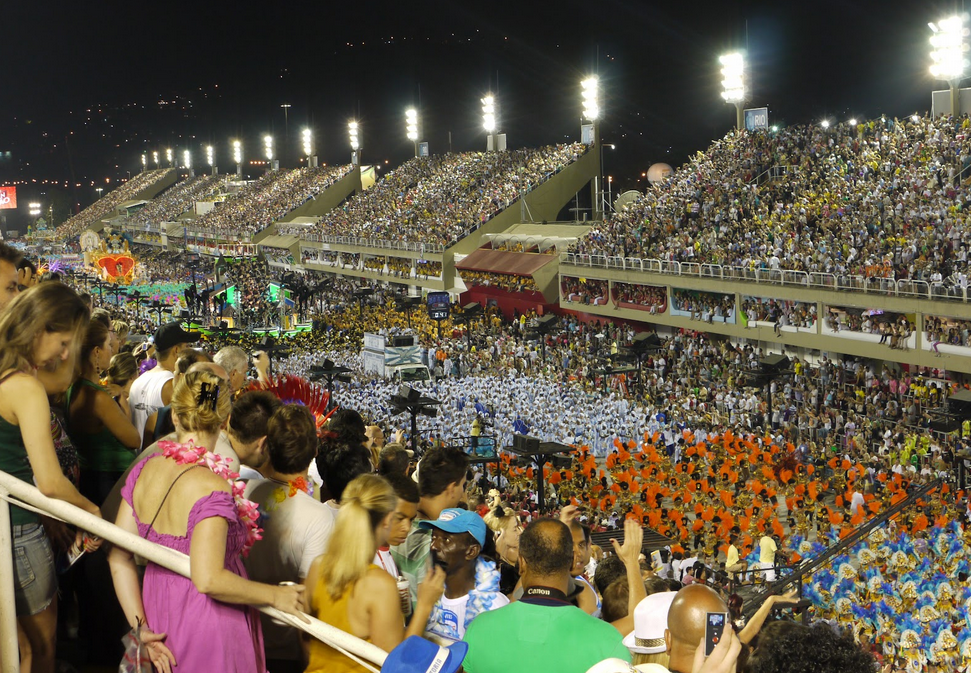
The people were warm and welcoming and proud of their culture. It helped that I speak Fluent Spanish and could do passable Portuguese. Funny thing, in México, they do not translate or subtitle interviews in Portuguese with Brazilian soccer players. They figure you can pick up on your own on what they are saying. I certainly could even though Carioca Portuguese is almost a language all to itself. It’s all soft g’s and sh’s and zsh sounds. It’s the sound of pillow talk. Anthony Bourdain did a show in Bahia, in the north of Brazil and a place I also visited on this trip, in which he described the people there as “either on their way to or coming back from having sex”. Rio is more big city, so that doesn’t apply, but it does describe nicely the way they speak.
Listen to some Bossa Nova sometime. Like now:
https://www.youtube.com/watch?v=EQC4Ye7hr9Y
Bossa nova was born in Rio as a mix of samba and jazz. The central themes are usually women, love, longing, homesickness, and nature. Now, listen to the music. Doesn’t that put you in a good mood? The lyrics, however, speak of sadness. That’s Rio. That’s Brazil.

Rio has two main airports. They are both on the water. The most spectacular one is Santos Dumont. This is the airport James Bond was monitoring in Moonraker. The planes landing have an awesome approach
As soon as I saw Moonraker when I was a kid, I knew I wanted to visit Rio and, of course, go here:
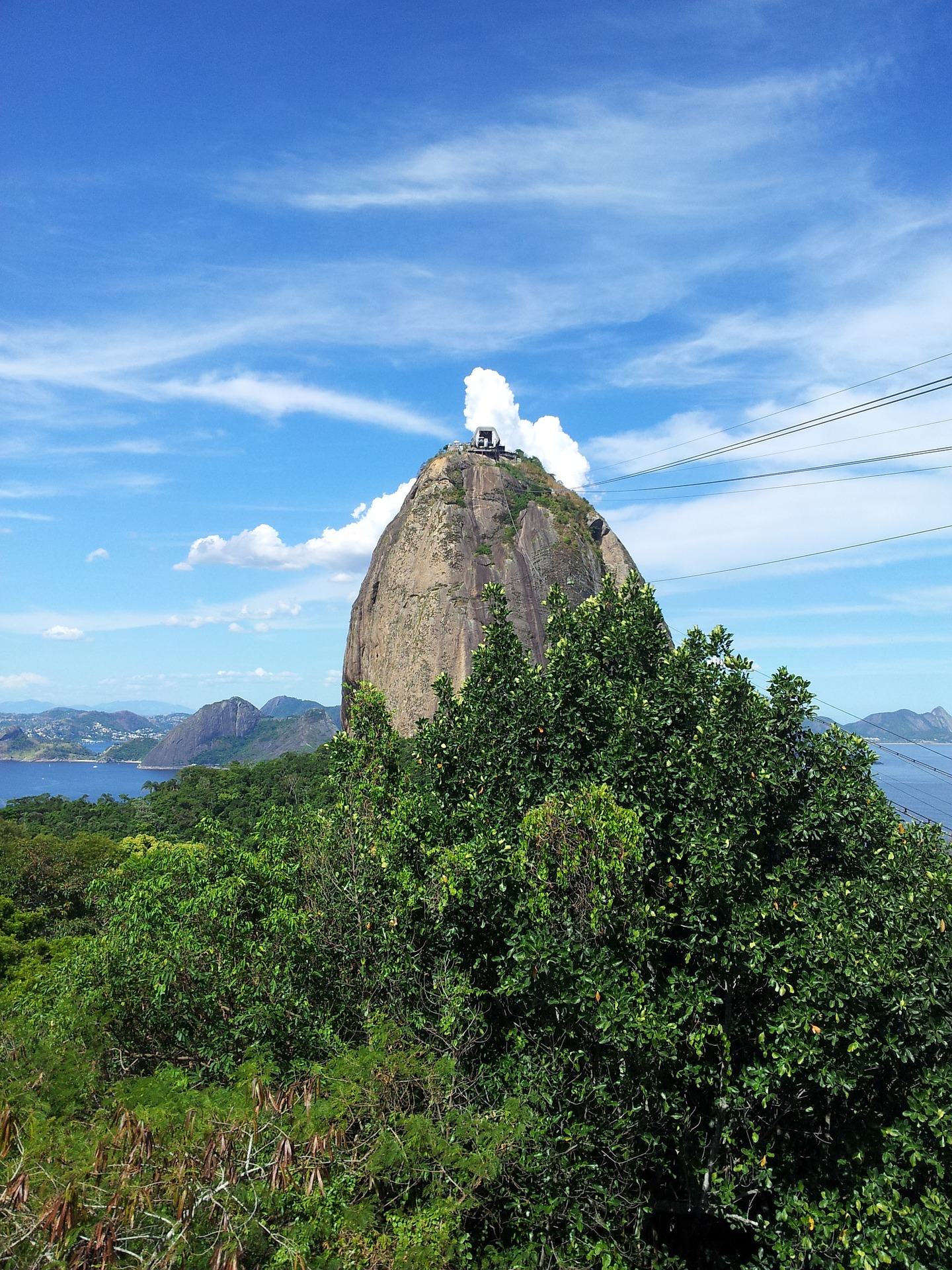
That picture doesn’t do the view justice. It is unbelievable. All I was thinking when I was up there was “How the fuck did they build this thing?” Fun fact, on the way down (or up, for that matter) you can take a train that winds its way through the rainforest. It’s like a Disneyland ride except the shit’s real. Speaking of Disneylandia, did you know there is a famous square in Rio called Cinelandia?
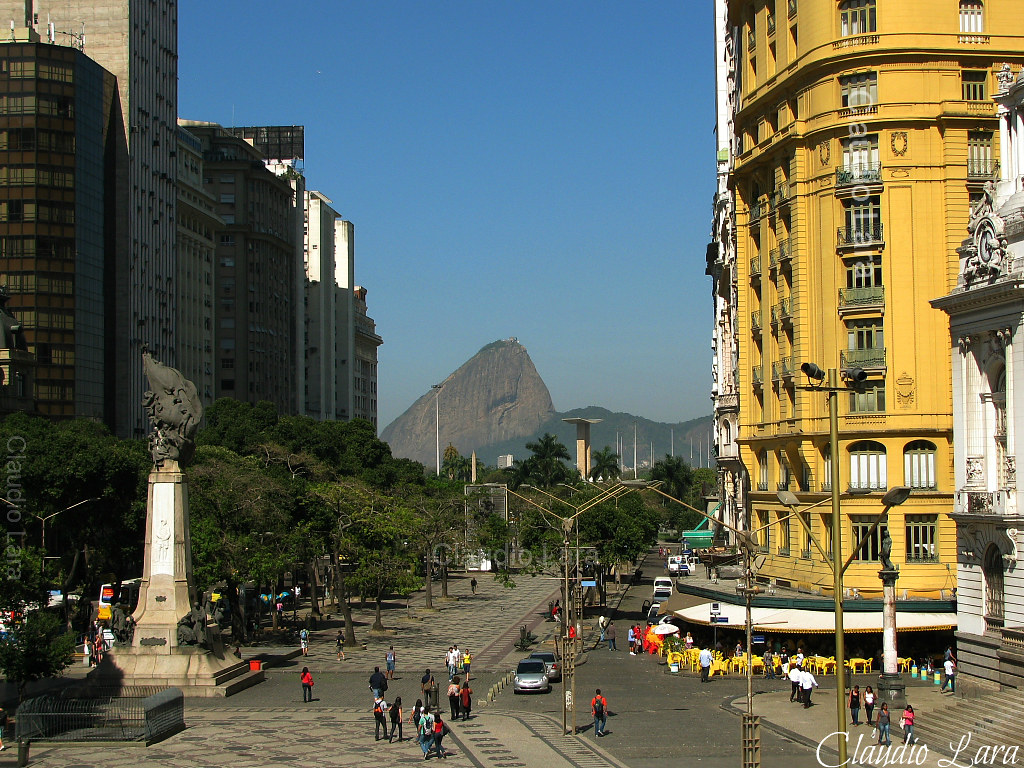
It is basically the transition from downtown buildings to the water. Which is a perfect segue to talk about the beaches. There are several famous beaches in Rio. This map will help explain where they are located in relation to each to each other:
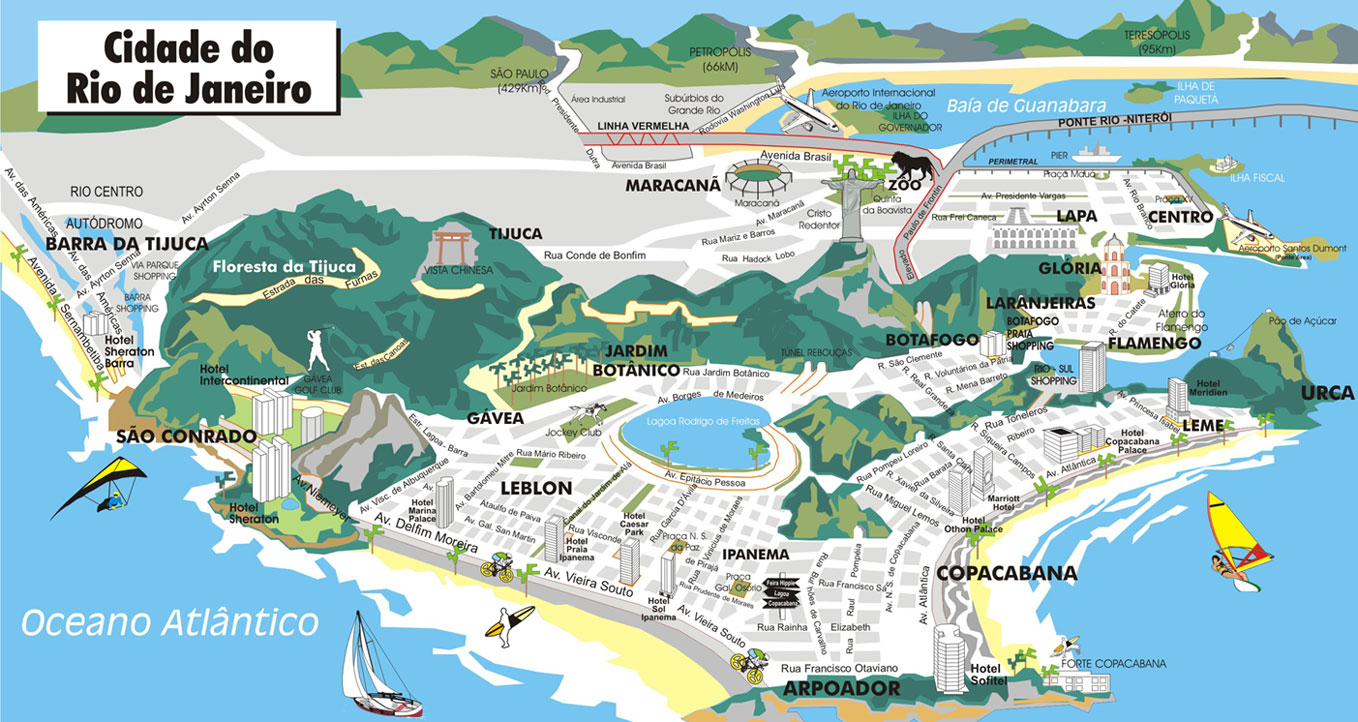
Each neighborhood has its own beach and each beach has its own numbered sections. Each section has individual characteristics which distinguish it from others. For example, one section might be famous for futevolei, beach soccer/volleyball,

Another might be famous for the snacks sold along the beach

Or the drinks, mostly caipirinhas or beer
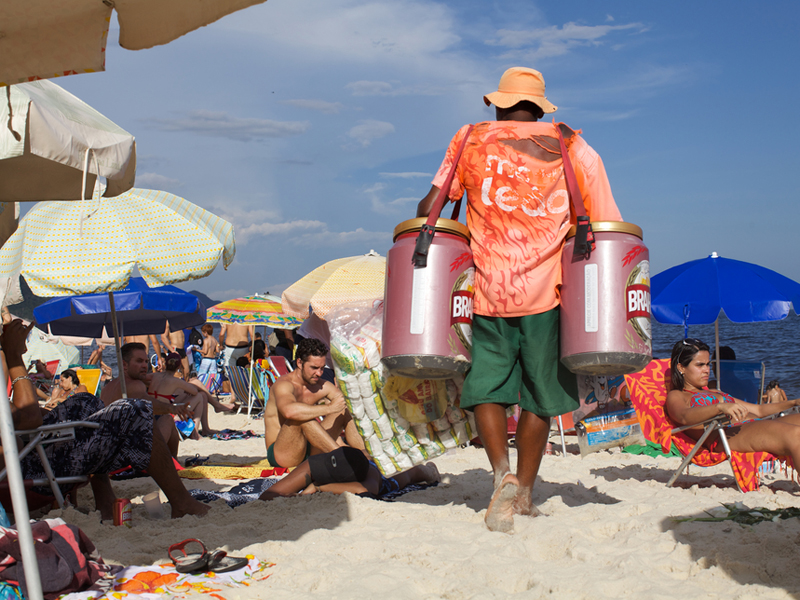
There is a gay section, a family section, a section where young people go to flirt, there is something for everyone. It’s actually pretty well structured. The one common denominator is one thing:

Yes, the bunda. We call it the ass. The thong originated in Brazil and it is common for everyone and I mean EVERYONE to wear bikini bottoms that showcase the buns. Old, fat, pregnant, it doesn’t matter. Only foreigners wear bathing suit bottoms that cover their butt. Here is a pretty good rundown of the different styles. Can you tell me what all of these different styles of brazilian bikini bottom have in common?

Yup, they are meant to showcase the ass. Oh, and lest you think only women get to have all the fun, men wear a looser version of the speedo. All men. Only surfers wear board shorts and they better be carrying a surfboard.

The beauty part is that you would think that everyone would have to work out all the time in order to be able to wear those suits. NOAP! They are proud of their bodies, no matter what they look like. There is a lesson there for the rest of us.
On the cover of Joao Gilberto’s album, you can see the word “saudade”. It means “longing”. It can be for lost love, good times or happiness of olden days, or it can even be for a place. I can say that I have that for Rio. I wish I could go back to that hammock and let the rain fall and forget about the world and my problems and be happy. Of course, I can’t. Even if I were to buy a ticket, that place and time is gone, never to be repeated. Which is why the lesson, kids, is to savor every moment you have of joy and happiness. And, no matter how bad things get, remember an old phrase my mom taught me, “Nadie te puede quitar lo bailado.”
Roughly translated, it means that No one can take away the good times you’ve had.
So, as you see report after report of the horrible conditions in Rio, keep in mind that the locals are drinking and playing music and dancing in the middle of it all. Fuck it, life is short.

![Balls On… The Bond films of the 70s – [DOOR FLIES OPEN]](https://secure.gravatar.com/avatar/5c40264d1417136002061f41ffae04dbe2dda9d9a780fb33536394fb90894d7b?s=64&d=blank&r=x)
![Your 2019 Copa América Tournament Preview – [DOOR FLIES OPEN]](https://secure.gravatar.com/avatar/552fd6273bd76a091fe71ec2ccc3e5cb5262f77b0d13b344d1f021a8651452d6?s=64&d=blank&r=x)


Leave a Reply
You must be logged in to post a comment.